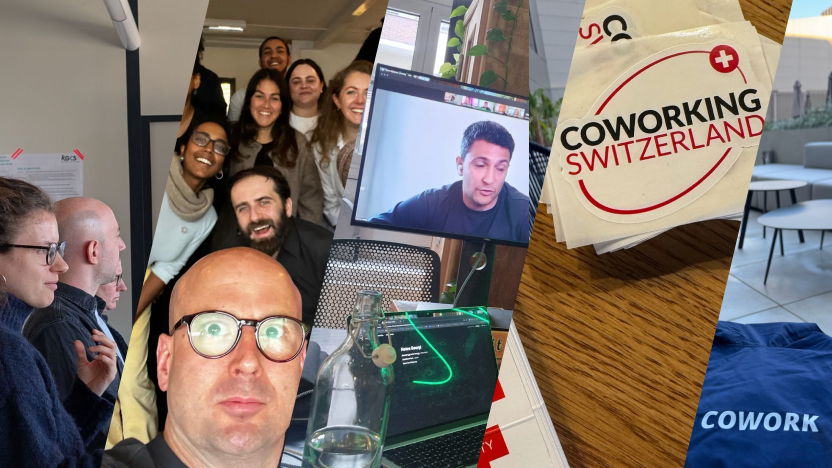
Hi there, I'm Rosee from Cobot. We're halfway through 2026, and we've already been to a research symposium in Berlin, the Coworking Switzerland Annual Meetup in Zug, the Coworking Spain Conference 2026 in Barcelona, the Coworking Alliance Summit, and Unreasonable Connections LIVE in London. Before we move into the second half of the year, here's a look back at six of my personal favorite moments:
The LATAM operators who keep their spaces running no matter what
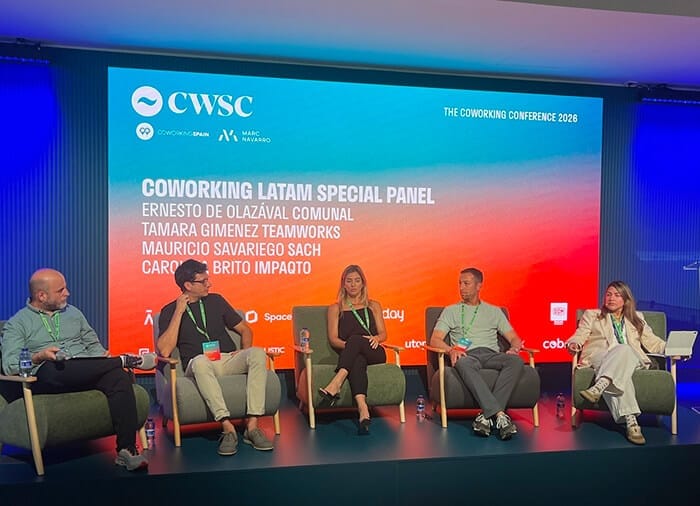
At the Coworking Spain Conference 2026, operators from Mexico, Argentina, and Ecuador joined a panel and openly discussed the challenges of maintaining a coworking space amid inflation, power outages, and political uncertainties. Carolina Brito from IMPAQTO in Ecuador described keeping her space going through an electricity crisis and a drought. These aren't problems most European operators will face, but hearing how people work through them changes how you think about your own.
And none of them are running on a safety net. These are independent operators working with whatever they have and figuring it out anyway. What came through clearly is that their size isn't a disadvantage. Smaller operators move faster, negotiate better with landlords, and adapt without waiting for approval from three layers up. Tamara Gimenez from Teamworks in Argentina made this point directly when the conversation turned to competing with big chains. The agility is the advantage.
Spaces from Gaza joined the Coworking Alliance Summit
Georgi from our team joined the Coworking Alliance Summit, which took place online in March and was organized by Ashley Proctor, Hector Kolonas, Sam Poler, and Bernie Mitchell.
What stayed with him, and with me when I heard about it, was that spaces from Gaza were there. The organizers reached out to them and made sure they had the space to share their experiences. In conversations that often center on pricing, marketing, and occupancy, that felt important to acknowledge.
Coworking has always been built on the idea that people do better work, and live better, when they have a community around them. That doesn't stop at borders, and it doesn't stop when things get hard. People in Gaza are living through war, displacement, and loss on a scale most of us will never have to face. That they showed up anyway, and that the summit made room for them, says something about what this community actually values.
A number worth anchoring your second half of the year around
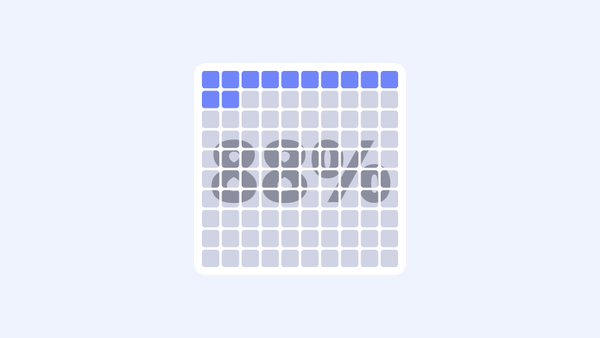
AI has been a constant topic across every event this year, but most of the conversation stays at the level of advice. What Jaime Villalonga from Wayco brought to Coworking Spain was data: leads arriving through AI-generated answers convert 4.4 times more than organic traffic. Fewer leads, but far more decided by the time they find you. And 77% of companies haven't invested in GEO (Generative Engine Optimization) yet.
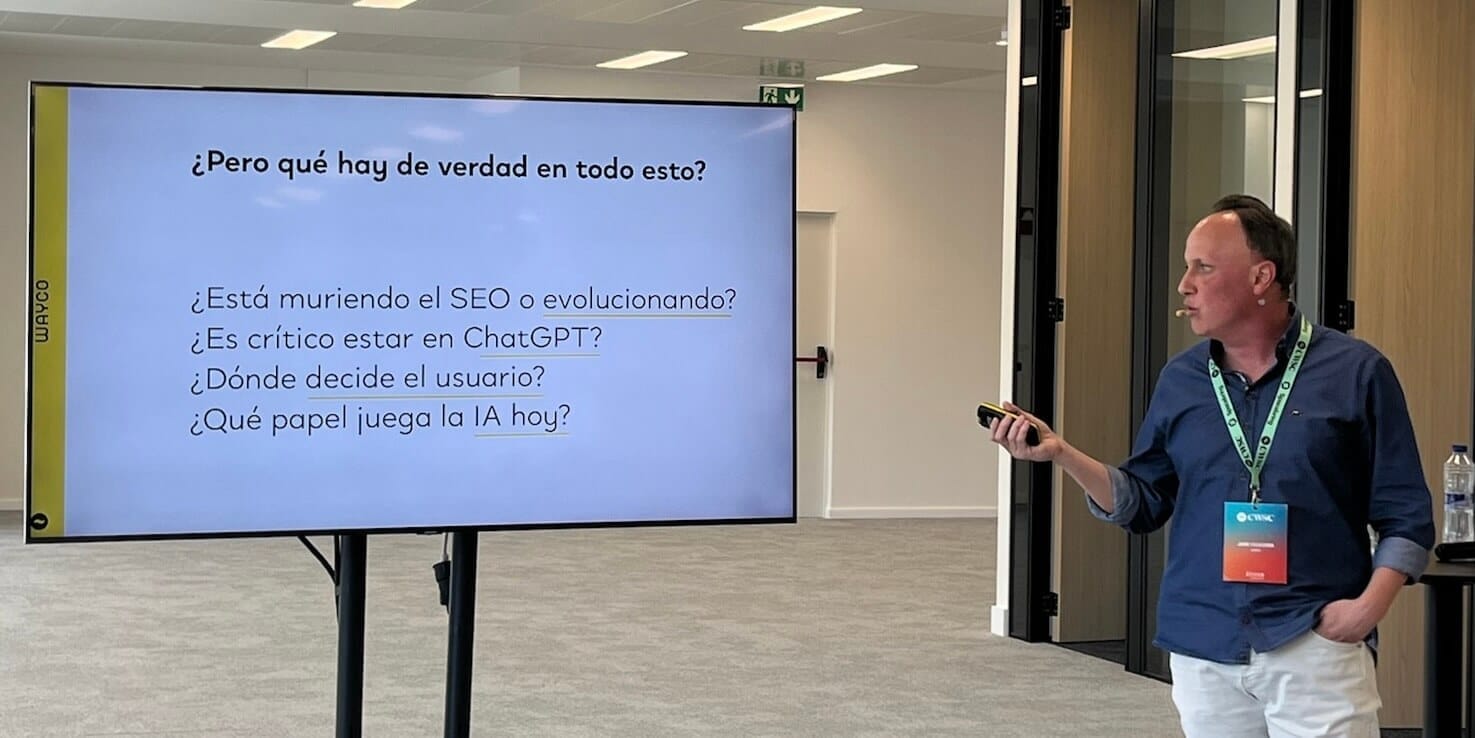
For most coworking operators, that gap is open right now. Jaime's advice: start with SEO (Search Engine Optimization) before GEO, since GEO draws from structured content and existing pages anyway. Add FAQ sections to your website, optimize your Google Business profile, and create specific landing pages for each location and offering. The foundation is the same. The opportunity is bigger than most people are treating it. If you want to go deeper on this, Ahrefs' free Answer Engine Optimization course is a good starting point.
There's also a longer view worth keeping in mind. Kofi Oppong at Unreasonable Connections LIVE in London made the case that as AI and AGI adoption grows, we'll see a major rise in solopreneurs and small teams over the next decade. More of exactly the kind of people coworking spaces are built for. More people searching, and better conversion when they do.
Learnings travel
At the Coworking Switzerland Annual Meetup in Zug, Claire Carpenter built her session around Ben Kolp's eight keys to boutique coworking success, originally shared at Coworking Europe 2025 in Berlin. A few months later, the same ideas were helping operators in a different country think through their own spaces.
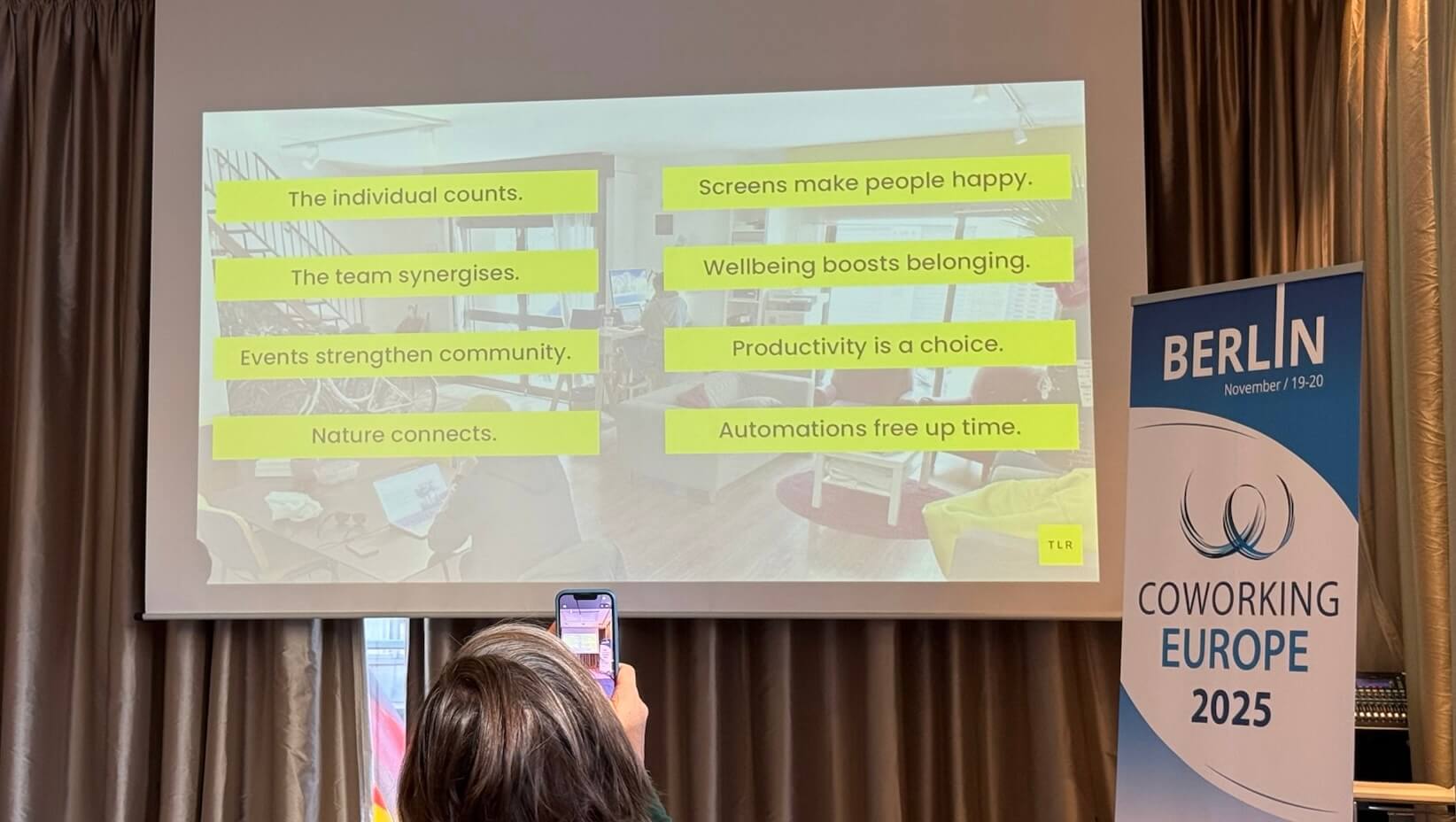
That's how knowledge moves in this industry. Someone finds something useful, takes it to the next room, and it helps someone else. The gap between "this worked for us" and "this could work for you" turns out to be pretty small when the community is paying attention.
Coworking is being studied as an economic infrastructure
In March, I attended the Research Group on Collaborative Spaces Symposium at Technische Universität Berlin. It was two days of academic research on coworking from perspectives I don't usually encounter: urban economics, sociology, and organizational theory.
Katarzyna Wojnar from Delft University of Technology presented research on coworking as urban resilience infrastructure. Her argument: coworking spaces adapt to economic disruption better than traditional offices because they're more flexible in how they structure leases, use space, and build member loyalty. In cities dealing with rising rents, oversupplied office markets, and energy price increases, that flexibility makes a huge difference. Central locations hold up. Spaces with strong communities hold up. That's not luck. It's how coworking is designed to work.
Nikos Gatsinos from the University of Graz brought it closer to people with biographical interviews from coworkers in Greece. One was a 26-year-old who joined a hub while looking for meaningful creative work. He started contributing freely to the space, got involved in the community, and found that what began as giving turned into something mutually sustaining. In a region with limited traditional career paths, the coworking space was where he found direction. Nikos called these spaces identity anchors. After hearing the stories he shared, that feels exactly right.
"Being loud with your space's identity is the best thing you can do"
That line came from Georgi's note from the marketing breakout at the Coworking Alliance Summit. The group discussed what sets independent spaces apart from chains, how to explain coworking to small communities, and what people are actually searching for when they look for a space.
His example for creative, identity-led marketing: workish.berlin's branded bike. It draws attention in the neighborhood, it costs nothing compared to paid ads, and it says something true about what the space is. No explaining required.
Conclusion
What all of these moments have in common is people. Operators sharing hard-won lessons across borders, researchers spending years trying to understand what makes these spaces work, organizers making sure voices that don't usually get a stage get one. That's what this industry is made of. Looking forward to the next half of the year!
Each of these moments has a fuller story behind it. The full recaps are listed below: