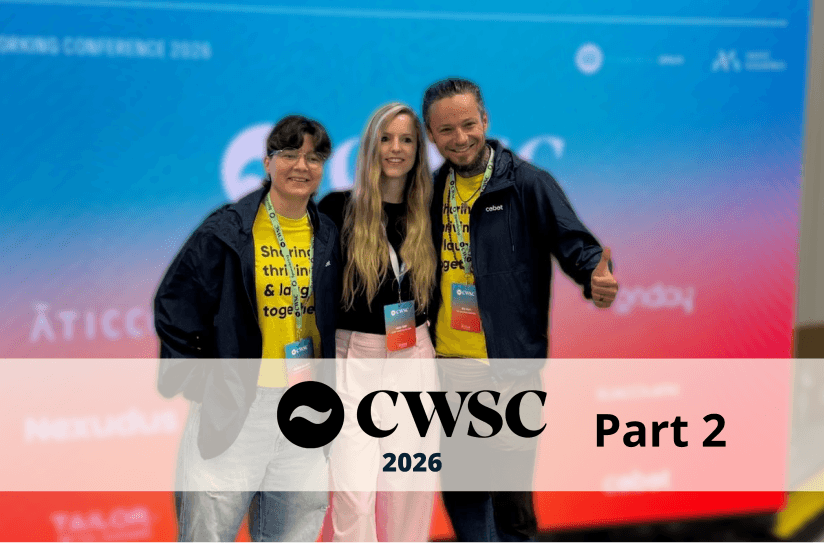
This is Part 2 of our Coworking Spain Conference 2026 recap.
If you missed Part 1, we covered the latest coworking market data from Spain, insights from operators across Latin America, and lessons on profitability from the hospitality industry.
In this edition, we're looking at how coworking operators are approaching growth, what they're doing differently in marketing, the lessons shared during the coworking fuckups session, and the spaces and operators recognized at this year's Spanish Coworking Awards.
Table of Contents
- Growth Strategies from Coworking Operators
- What Effective Marketing Looks Like for Coworking Spaces
- The Coworking Fuckups Session
- The Spanish Coworking Awards
Growth Strategies from Coworking Operators
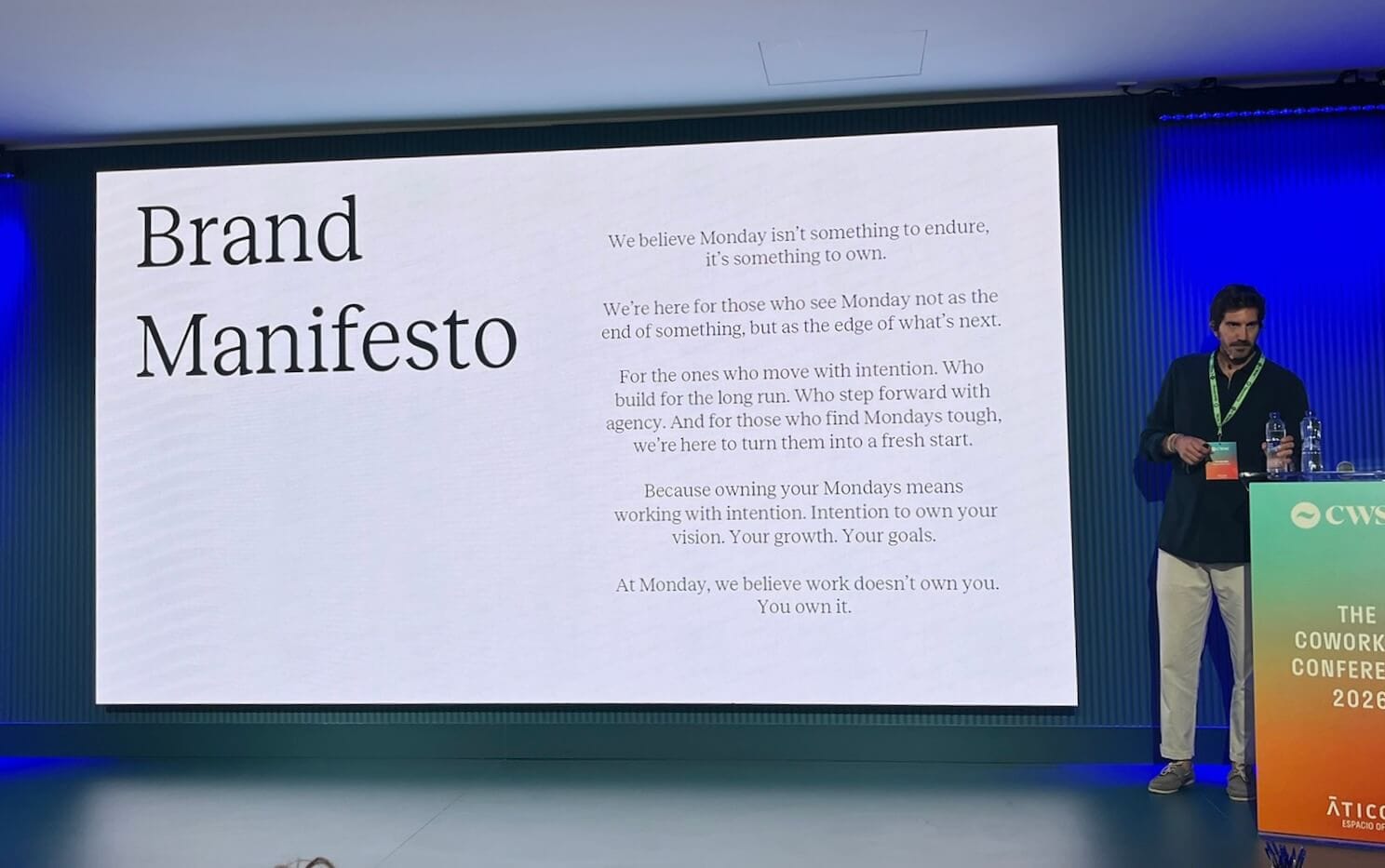
"There is a big difference between expanding and exploring, but they can overlap."
That's how Xavi Bassons, co-founder and CEO of Monday Working Spaces, framed one of the conference's recurring themes: growth. Not just opening more locations, but understanding why, when, and how to grow in the first place.
Monday's framework is built around four non-negotiables before expanding: identity, focus, team, and constancy. "It's impossible to grow something that's undefined," Xavi said. In practice, this means controlling the full building at every location, following a consistent product structure floor by floor, and avoiding buildings where they cannot manage the entrance.
Juanjo Martínez from Networkia, who has been running spaces since 2007, described a different approach. Networkia knows its member profile precisely, doesn't publish private office prices, and has stayed focused on Madrid and Lisbon.
That confidence came through clearly when he was asked about competing with Aticco: "Everyone finds their own path. What Aticco does is magnificent." What makes Networkia work, he said, is its team, deeply committed from the start, and that consistency is what they do best.
Raúl del Pozo of Cink described their model as "el Lidl del coworking": a solid product at competitive prices, based on high occupancy and short, flexible contracts. The Lidl reference is to the German discount supermarket known for quality at low prices.
They have 11 centers and 21 employees, and their biggest client accounts for only 3% of their revenue. When asked when a space is ready to grow, he answered simply:
“If you have the opportunity to secure a building that fits your model, you're ready.”
— Raúl del Pozo, CEO of Cink
Aticco brought an operationally intense story. They closed two buildings totaling 12,000m² to open one new location at 20,000m² in just five months. The learnings: get leadership directly involved from day one, over-resource rather than under-resource, communicate honestly with members throughout, and don't be afraid to close locations.
"Closing locations is necessary to grow."
— Gabi Espín, CEO and Co-founder of Aticco
What Effective Marketing Looks Like for Coworking Spaces
Two sessions covered marketing from different angles.
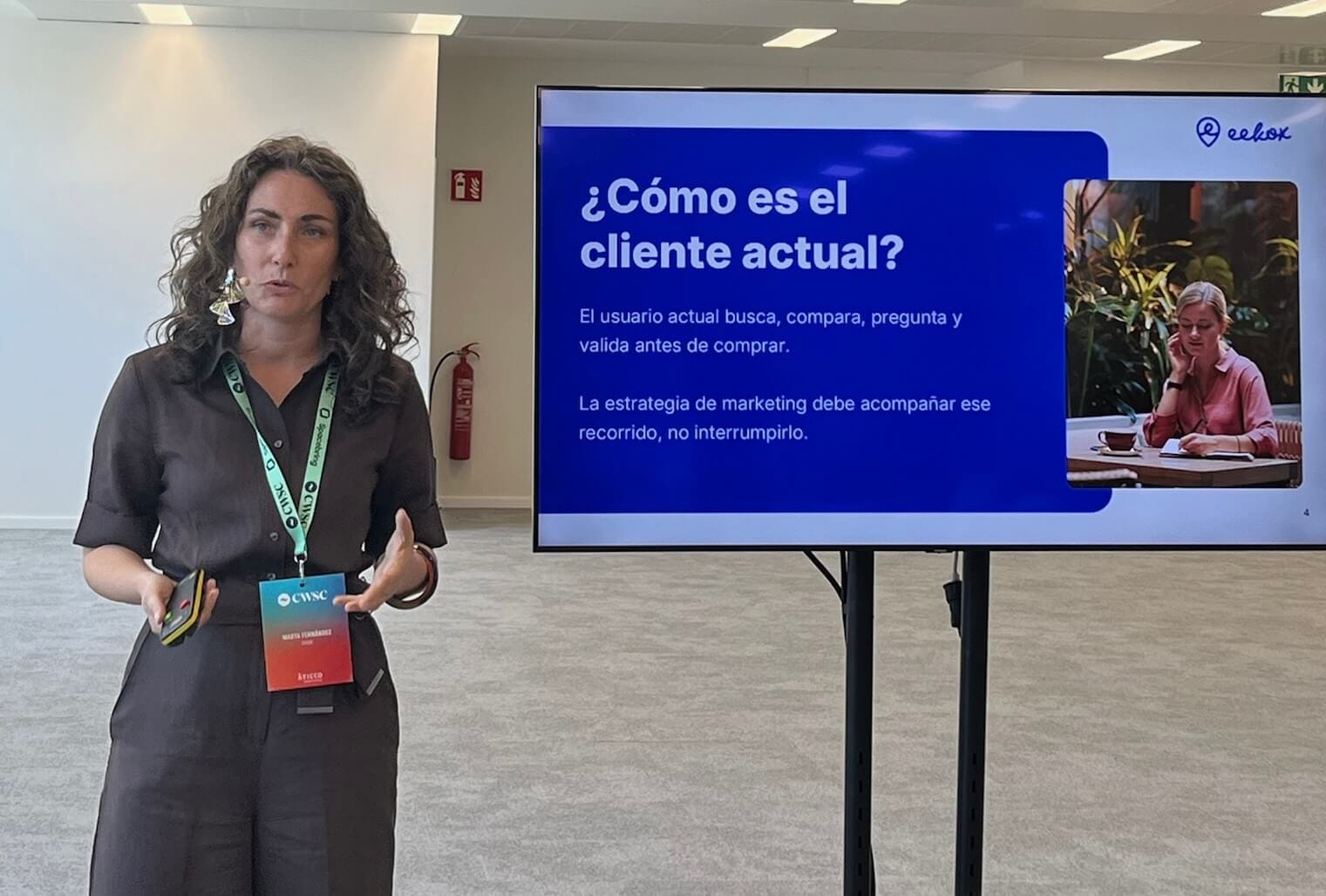
Marta Fernández from eekox opened her session with one question: how do you turn visibility into real occupancy?
Today's coworking client isn't passive. They search, compare, ask around, and check reviews before they walk through your door. Marketing's job is to be present at every step of that journey, not to interrupt it. And what your client values isn't only the space itself. It's also your brand, the experience, the attention they get, your prices, and the trust you build over time.
Marta shared search data worth knowing when you write your website or ads. "Coworking" gets around 550,000 average monthly searches globally. "Collaborative working spaces" and "coworking spaces" both reach 450,000. Smaller, more specific terms like "coworking café" (1,600), "coworking rural" (140), or "coworking sanitario" (70) point to real opportunities for spaces with a niche. If you use the same words your clients use to search, you improve your ranking, your message, and your conversion.
She also made a clear distinction: generating demand means creating interest where none exists, which usually takes time, content, and brand building. Attracting demand means being there when someone is already comparing options. For most coworking operators, attracting demand is the faster route, and the search data shows the demand is already there.
Her acquisition system has four steps: capture demand, build trust through reviews and social proof, expand visibility across channels (don't rely on just one), and optimize conversion by reducing friction between interest and a booking.
Jaime Villalonga from Wayco shared data suggesting AI is already changing how people discover businesses online: AI-driven traffic converts 4.4 times more than organic traffic. The implication for coworking spaces is that leads arriving through AI-generated answers are fewer but far more decided, meaning less manual comparison, fewer exploratory visits, and higher conversion rates.
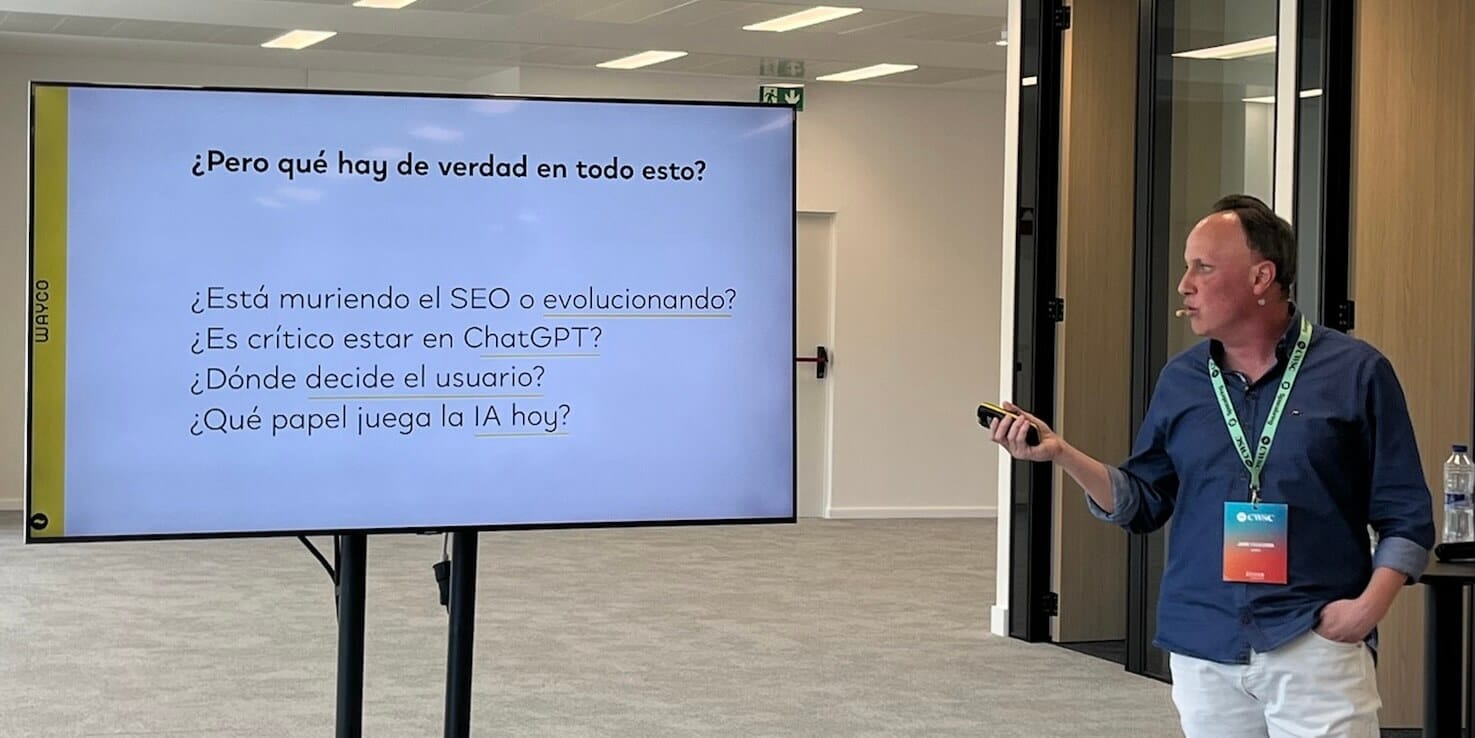
He offered practical advice: most operators should start with SEO (Search Engine Optimization) rather than GEO (Generative Engine Optimization), which draws from existing content and structured data. Quick wins he outlined:
- Add FAQ sections to your website
- Optimize your Google Business profile and improve page titles
- Create specific landing pages for each location and offering
77% of companies haven't invested in GEO yet, so the window is open.
Want more coworking marketing tactics every week?
We break down what actually works for independent coworking spaces every week in Coworking Marketing Weekly. From SEO, Google Business Profile Optimization, Local Marketing Visibility, and more.
The Coworking Fuckups Session
This year at CWSC, a familiar format made its way over from Coworking Europe 2024 and 2025, hosted by Robert Faulhaber, Chief Operating Officer of Coworking Europe. Operators came on stage to share real failures from their work, told openly, with the audience laughing along.
Stories included:
- An event was booked into the space without anyone checking what it was actually about. It turned out to be content marketing for an OnlyFans account.
- Seven years spent building management software in-house instead of paying for a license. After hiring one developer, then a second, then needing a third, the operator realized they were stuck running software they couldn't maintain. The conclusion: "There are great solutions. The licenses are well spent.”
- A cleaning staff member's keys to the space were stolen from their bag. The operator thought it wasn't too bad, since no one would know which keys belonged to which building. Turns out every key was labelled with its building address.
The stories did not stop when the speakers finished. People kept adding their own experiences from the audience, turning the session into a candid exchange of lessons learned.
It was one of the most useful sessions of the conference precisely because it covered everything that never ends up in slide decks.
The Spanish Coworking Awards
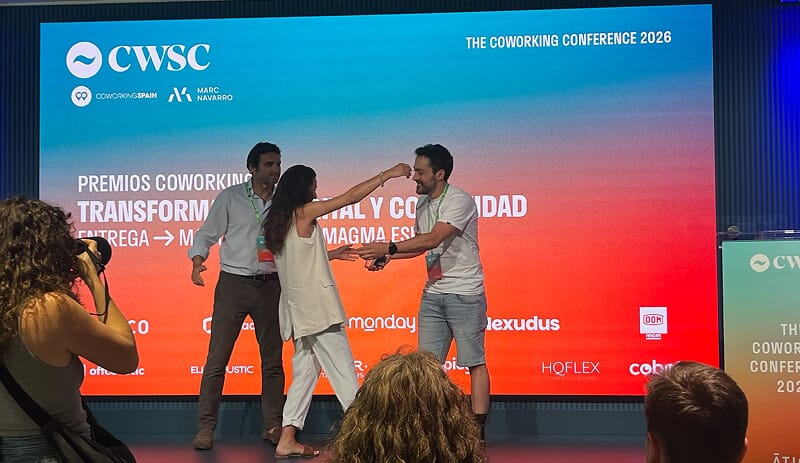
The awards ceremony closed the conference on a high note, recognizing spaces and people working across the industry. This year's winners:
- Excelencia (Excellence): Alberto Pérez Sola, workINcompany
- Diseño (Design): HIT Polo
- Mejor Coworking (Best Coworking): Loom
- Transformación digital y comunidad (Digital Transformation and Community): Loft 153
- Oferta de Salas y Eventos (Meeting Rooms and Events Offering): Aticco
- Expansión (Expansion): Aticco
- Mejor Speaker (Best Speaker): Xavi Bassons
- Mejor Speaker CWLC (Best Speaker CWLC): Ernesto de Olazával
- Premio Honorífico (Honorary Award): Javier de Timoteo
Congratulations to all the winners, and a particular nod to Aticco for taking home two awards in the same year they pulled off one of the most operationally demanding openings in the industry.
See you next year!