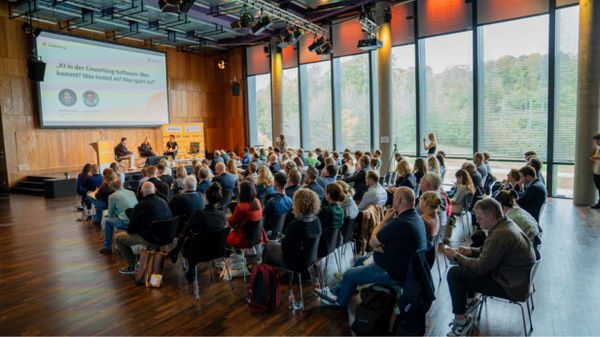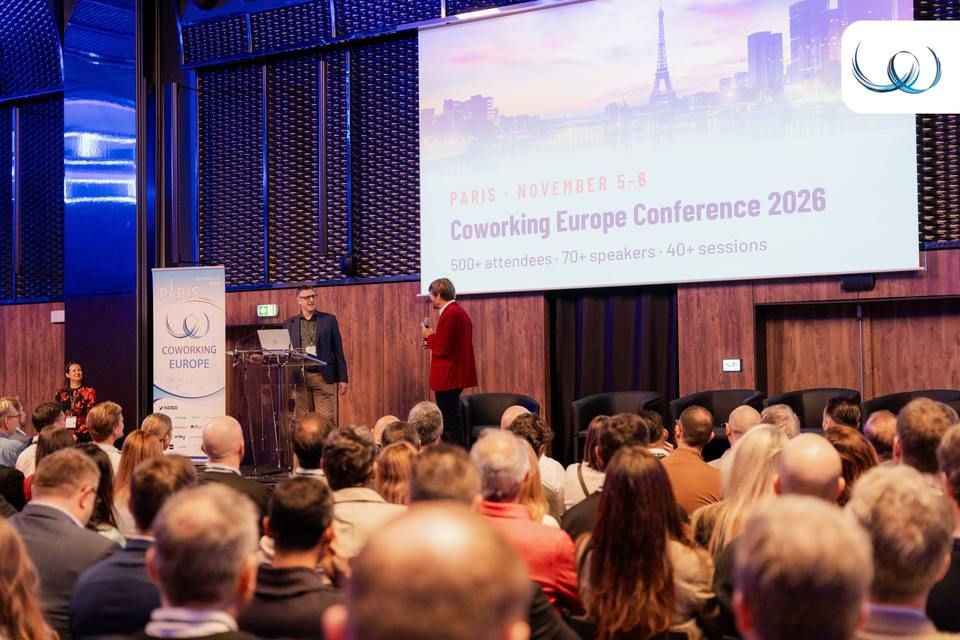
Coworking Europe 2026 brought the coworking and flex world to Paris 🇫🇷 on November 5 and 6. Operators, landlords, and partners came from all over the world to share what’s working in their spaces and what’s changing in the industry. Counting the coworking tours and the warm-up meetup, it was three days of exploring the Paris coworking scene, meeting old friends and new ones, and having conversations full of candid opinions and different perspectives.
📸 Photos by Dóra Árvai and Axel Huwart
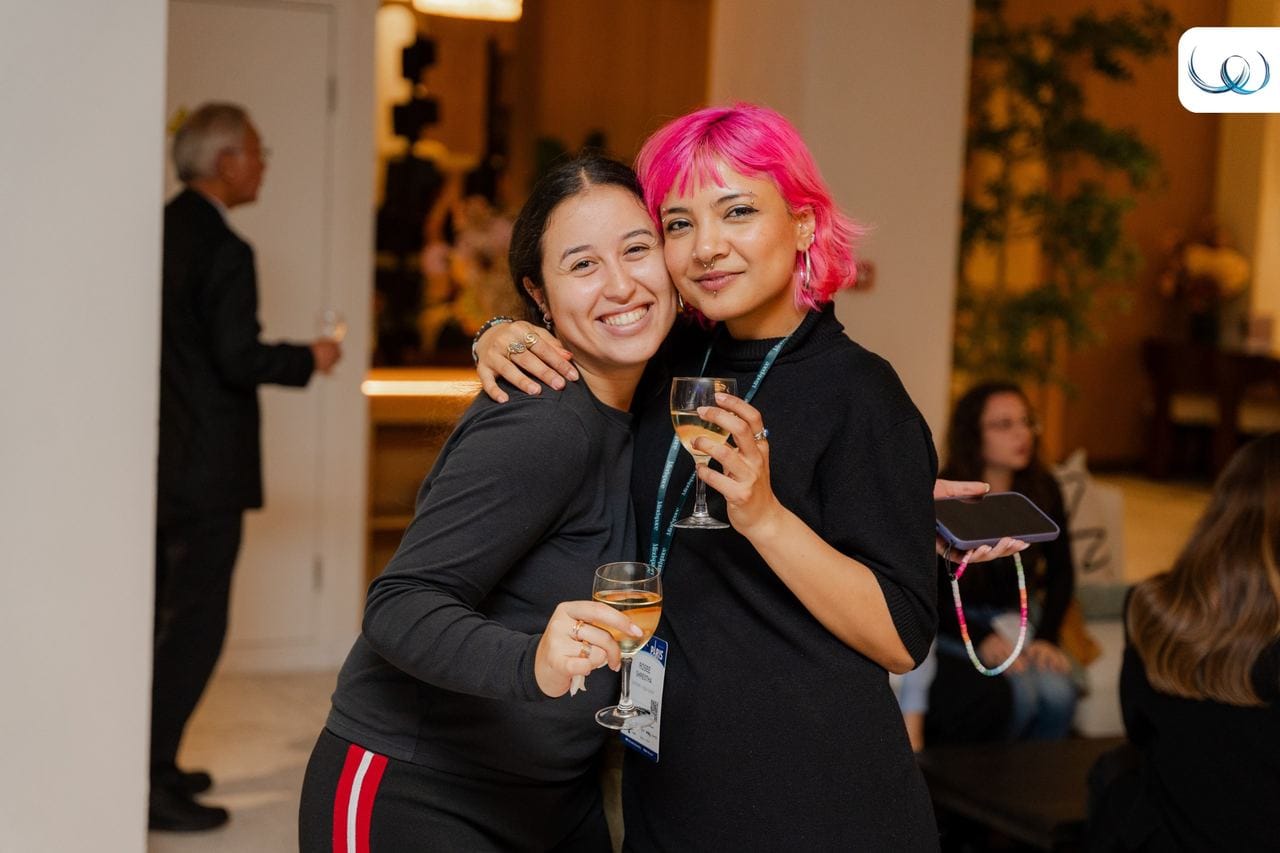
Rosee (Marketing Assistant) and Amy (Support & Sales Assistant) from our team split up to catch as many sessions as possible. We focused on the topics closest to what independent and medium-sized operators deal with every day: filling desks, finding members, building community, and making sense of AI. Here’s what we brought home, and what you can use in your space today.
Table of contents
- Why operators still matter
- Why do coworking and flex operators remain so important?
- From Vacancy to Value
- How coworking operators can accelerate growth through asset-light models
- Turning space into revenue
- Every Desk Counts
- How to increase conversion rate at a time of higher competition and uncertainty
- Virtual offices: more revenue from the same square meters
- How small, local operators win
- Getting found and getting chosen
- Marketing: focusing on the people, the facility and the price
- Beyond the Space: how customer stories and people build value
- People make the space
- From Members to Community
- The people behind the space
- AI and the future of flex space
- Your AI Doesn't Know What You Sell
- The AI-Adapted Flex Workspace
- When the lights go out, the people become the power
Why operators still matter
If landlords can split their buildings and run them with tech, why do they need operators at all? Two sessions tackled that question from different sides, and the answer was clear: hospitality, expertise, and community are hard to automate.
Why do coworking and flex operators remain so important?
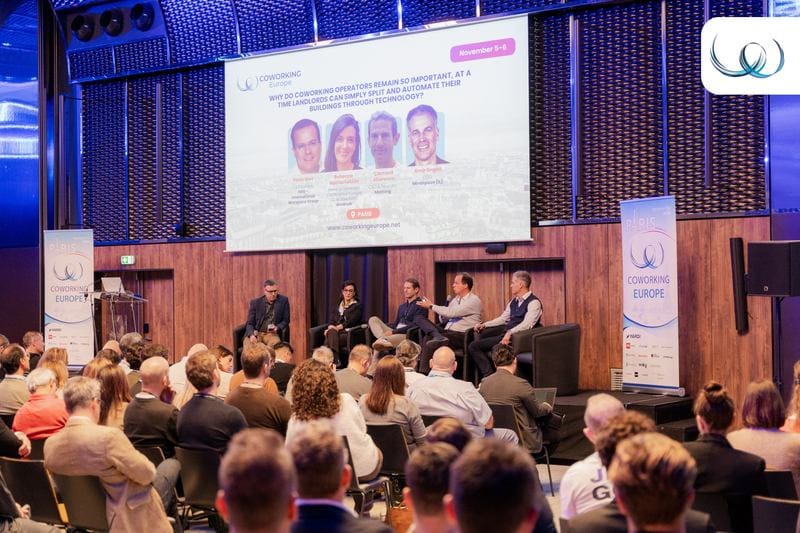
Jean-Yves Huwart moderated this opening panel with Clément Alteresco (Morning), Rebecca Nachanakian (WeWork), Amir Segall (Mindspace) and Paulo Dias (IWG).
Paulo explained that many landlords tried running flex space themselves and realized they couldn't. Demanding clients need a different kind of expertise, and the costs of operations, sales, and marketing are high. The job is to offer the right place, at the right price, at the right time. His teams use AI a lot to automate processes, and he said it makes finding the root cause of a problem about 10 times easier. Even so, the smiling face at the front desk is still what makes the experience.
Rebecca was clear that landlords and operators are partners. She has never seen an automated hotel and doesn't expect automated workspaces. Landlords deliver the real estate, and operators deliver the experience: the arrival, the energy, a good coffee, the networking. AI can take over admin and repetitive tasks, but reading a member and building emotional connection still takes a person.
Clément pointed out a paradox. The more we work with AI in front of a screen, the more the physical space matters. Amir, who spent ten years at Airbnb, added that operators bring life and a diverse crowd into a building. That mix opens a landlord's building to new industries and services, and he sees people looking for human connection more than ever.
From Vacancy to Value
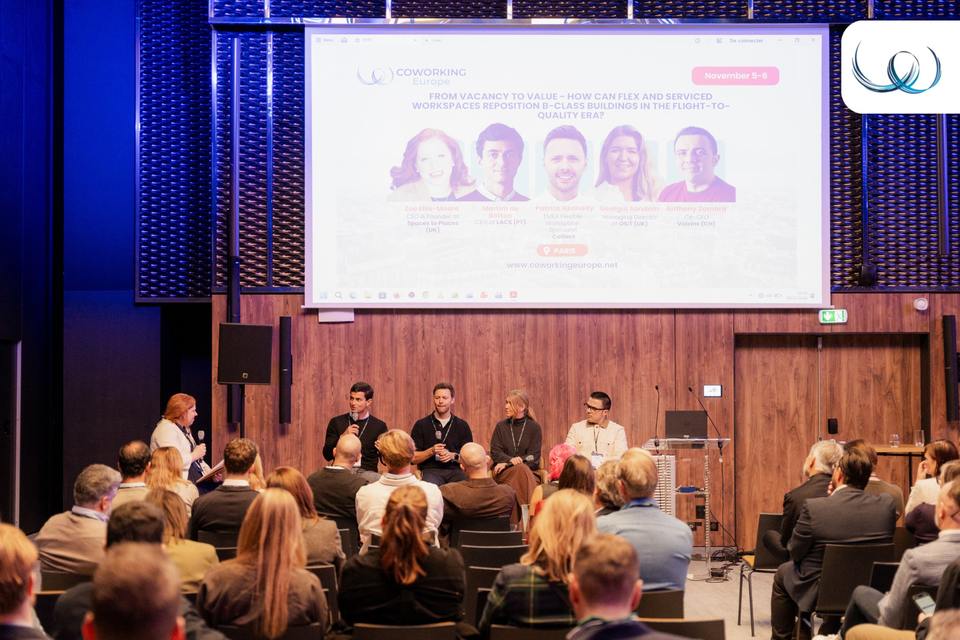
Zoe Ellis-Moore (Spaces to Places) moderated a panel on the buildings landlords struggle to fill. She cited a Cushman & Wakefield report from two years ago finding that 76% of offices in London, Madrid and Paris were at risk of becoming obsolete. Patrick Kennedy (Colliers) explained that as city center rents rise, good grade A buildings are getting harder to find. Empty buildings that landlords don't know how to reposition are where operators come in, often through profit-share models.
Anthony Zamora (Voisins) brought a very inspiring example. In Geneva, his team took over a 29,000 sqm building at 52% occupancy. They built an events program, found a café that fit the building, and opened coworking on the ground floor. Collaborations with festival and spirits brands turned an ordinary building into a place people wanted to visit. He was also very honest about the effort behind it all: it took around 100 presentations to land a 2 to 3% success rate with landlords.
Martim Botton (LACS) shared how his team refurbished a former labor court and old dockside locker rooms in Portugal. For him, value comes from location, services and people. Georgia Sandom (OSiT) closed with advice every operator can use: great data and clear reporting are what attract landlords.
Turning space into revenue
Virtual offices: more revenue from the same square meters
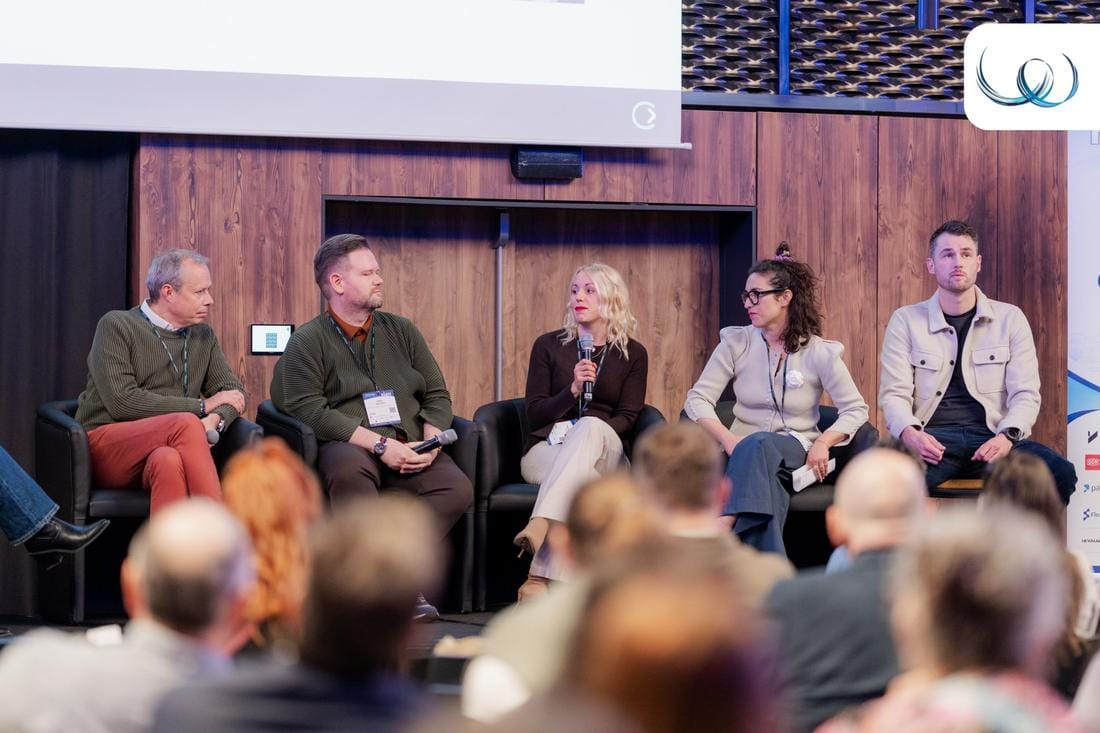
Virtual offices were one of the most practical topics of the conference. Thom Wernke (StartDock) opened with a keynote, then joined a panel moderated by Anne-Marie Murphy (Baseworx) with Prof. Dr. Axel Minten (BVCS), Sarah Brami (Synaphe), Fabrice Moerman (BWA) and Francesca Dixon (Flex-AML).
Thom laid out the business case. A virtual office client is almost never on site, costs little to serve, and scales easily. According to his slides, virtual offices can add around 20% (or more) in revenue to a location, with margins of around 50% (or more). Demand comes from four channels: online platforms, your own customers, referral partners, and digital marketing.
The catch is compliance. KYC (know your customer) checks sit between signup and contract, which makes them the real scaling constraint. And the bar is rising. Thom explained that the EU Anti-Money Laundering Regulation (AMLR) will apply to domiciliation providers, which includes coworking spaces offering business addresses. According to his slides, it takes effect on July 10, 2027, and replaces national rules on money laundering, fraud, and terrorism funding.
Axel called virtual offices a must-have for small spaces. A small space has a fixed number of desks, but its virtual office capacity can keep growing. He also sees virtual office clients as a great audience for upselling, and many of them want to become part of the community. When clients come in to show their passport for verification, that visit is a chance to show them everything else your space offers.
The rest of the panel agreed that compliance should be built in from the start. Sarah advised building your business model around it from day one. Francesca suggested investing in it now and treating it as part of your sales pitch, something to be proud of. She also recommended starting with a clear audience instead of accepting everyone. Fabrice encouraged operators to reach out to their national associations, which already have the expertise. Thom summed it up: education is the biggest blocker, and compliance is an obligation.
Operator takeaway: If you don't offer virtual offices yet, run the numbers for your space. If you do, get your KYC process ready for AMLR well before July 2027, and make sure at least one person on your team knows the rules.
Getting started? Our guide to the legal requirements for offering virtual offices covers Germany, Switzerland, France, Spain, the UK, Canada, and the USA, including KYC and anti-money laundering rules.
If you run your space on Cobot, our Regpit integration takes a big part of the KYC work off your plate. You start a client's identity check right from your Cobot dashboard, and Regpit handles the verification, for example, by video identification or eID. Cobot also covers the rest of your virtual office admin with automated invoicing, secure member records, and GDPR-compliant data handling.
Every Desk Counts: the numbers behind desks, day passes and meeting rooms
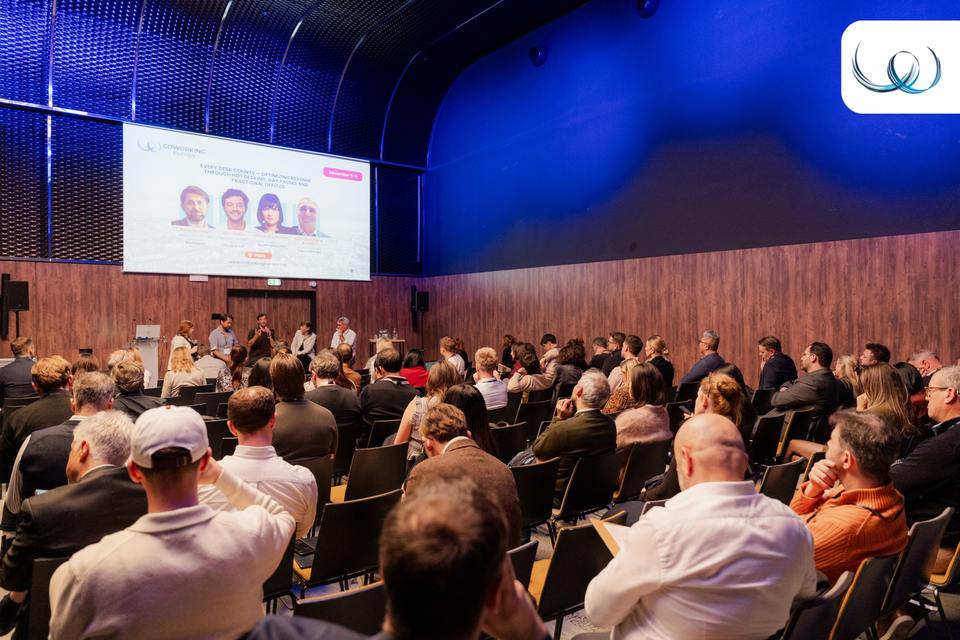
The Every Desk Counts panel, moderated by Zoe Ellis-Moore (Spaces to Places), went straight to the numbers. Peter Demidov (Mindspace), Eyal Lasker (Flexspace AI), Alexandra Livesey (Mantle Space) and Jean-Christophe Bugeon (IWG) talked about hot desks, day passes and meeting rooms as real revenue drivers.
Peter shared a striking figure: the average fixed desk in a private office is used only 30% of the time. At Mindspace, private offices make up 85 to 90% of the business globally, but flex desks, membership plans and events are growing fastest. His answer to empty desks is a clear funnel: a day pass leads to a membership plan, a membership leads to a dedicated desk, and a dedicated desk leads to a private office. Every step carries value.
Eyal looked at meeting rooms and events, which he said bring in 20 to 30% of revenue. Room utilization often sits at 20 to 30%, split between members and visitors. His tip: when a visitor books a meeting room, offer them a day pass too. He also made a strong case for dynamic pricing. His rule of thumb is 1:3, meaning a 1% lower price brings about 3% more bookings. Price elasticity in coworking is healthy, so small price moves can drive real volume.
Eyal reminded everyone that the customer journey builds your funnel. Promo codes help, but the hospitality people feel in your space is what turns a visitor into a member. Direct inquiries matter too. If people can't find you, you have a branding problem. Google reviews help a lot, and they also make it easier for AI agents to recommend you.
Alexandra brought 25 years of hotel experience to the stage. Her advice was simple: take care of basic human needs like air, light, and sound, and support members proactively. When something works, ask what went right and repeat it. Jean-Christophe added that every brand needs a clear identity, so customers know what to expect when they walk in.
Operator takeaway: Treat day passes and meeting rooms as the first step of your membership funnel. Make them easy to book online, follow up with every visitor, and test small price changes.
How to increase conversion rate at a time of higher competition - waiting for notes from Amy
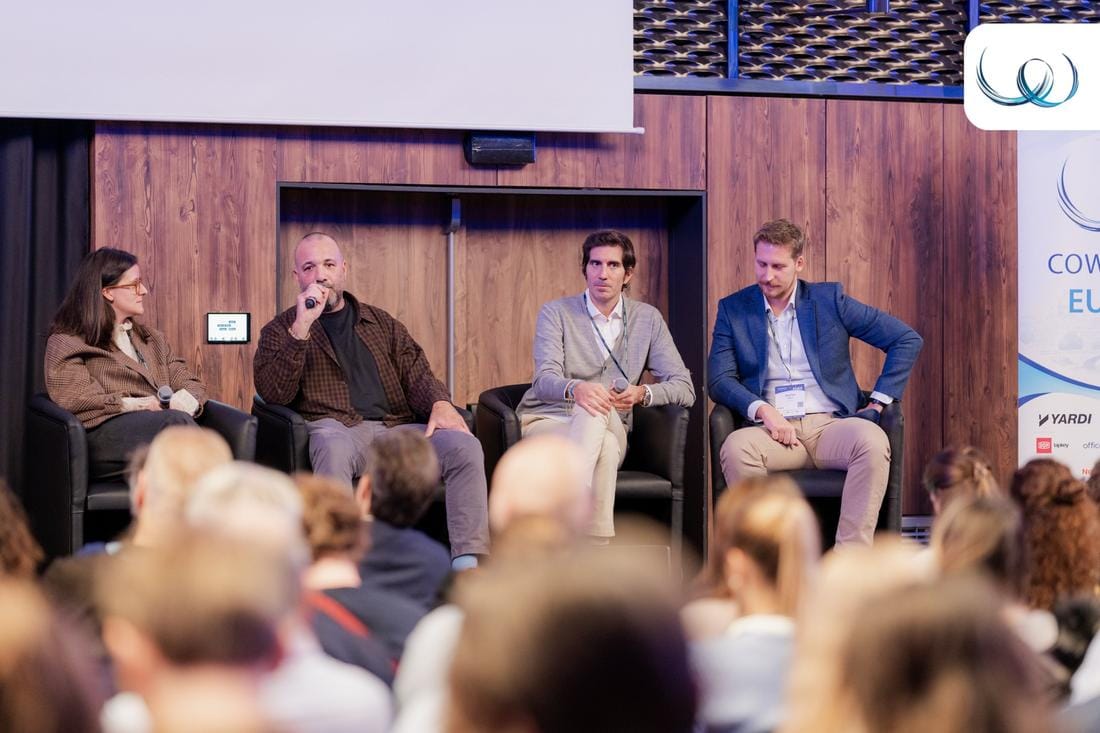
Emilie Lashmar (GCUC UK) moderated this sales panel with Martin Holy (Scott.Weber Workspace), Xavi Bassons (Monday Working Spaces), Nir Kelner (Brain Embassy) and Marta Gracia Vilar (Cloudworks).
Martin runs the largest coworking operation in the Czech Republic, and for him growth starts with a solid base. Most of his leads come from Meta ads and direct calls, with smaller shares from referrals and brokers. Brokers bring only about 5% of leads, but around 80% of conversions. He also sees AI becoming the new search engine. Using live data with AI helps his team close deals faster and leaves more time for people. His advice: offer a mix of small and large membership plans, so one big client leaving doesn't hurt too much, and give offboarding as much care as onboarding. Members who leave on good terms send referrals, and some come back.
Xavi looks for leads who bring long-term value, rather than people who choose you only because you're the cheapest, biggest, or newest. In-house clients and referrals help him understand why people come and what their pain points are. He added that the size of a deal affects how quickly it closes.
Nir said there's no magic formula for lowering cost per lead. Google and social media matter more than ever, because they feed AI tools and help your space appear in more AI answers. Still, the first point of contact should be a person: nobody wants to see a bot behind the front desk. He sees good salespeople as farmers who focus on upselling and the customer experience, and who offer something before they ask for something, which helps prevent churn. On pricing, he suggested an AI dashboard that sets an average price per location based on local competition.
Marta works with consultancy firms on her online presence, because filtering leads is tricky and not every lead is your lead. Every morning she checks her number of deals and their long-term value, monthly revenue, qualified versus unqualified leads, budget, net profit, and early signs of churn. Every six months, she interviews members about how satisfied they are. When a member struggles financially, her team acts as an advisor instead of a space provider. She's also fine with letting price-focused members go, since not every member will value the service. Her churn rate is 1%.
Operator takeaway: Track where your conversions come from, beyond lead volume. Keep a person as the first point of contact, watch for early signs of churn, and treat offboarding as part of the member experience.
How small, local operators win
Can small, local and authentic beat scale? The independent operators on this panel showed that it can, with reputation, presence, and creativity.
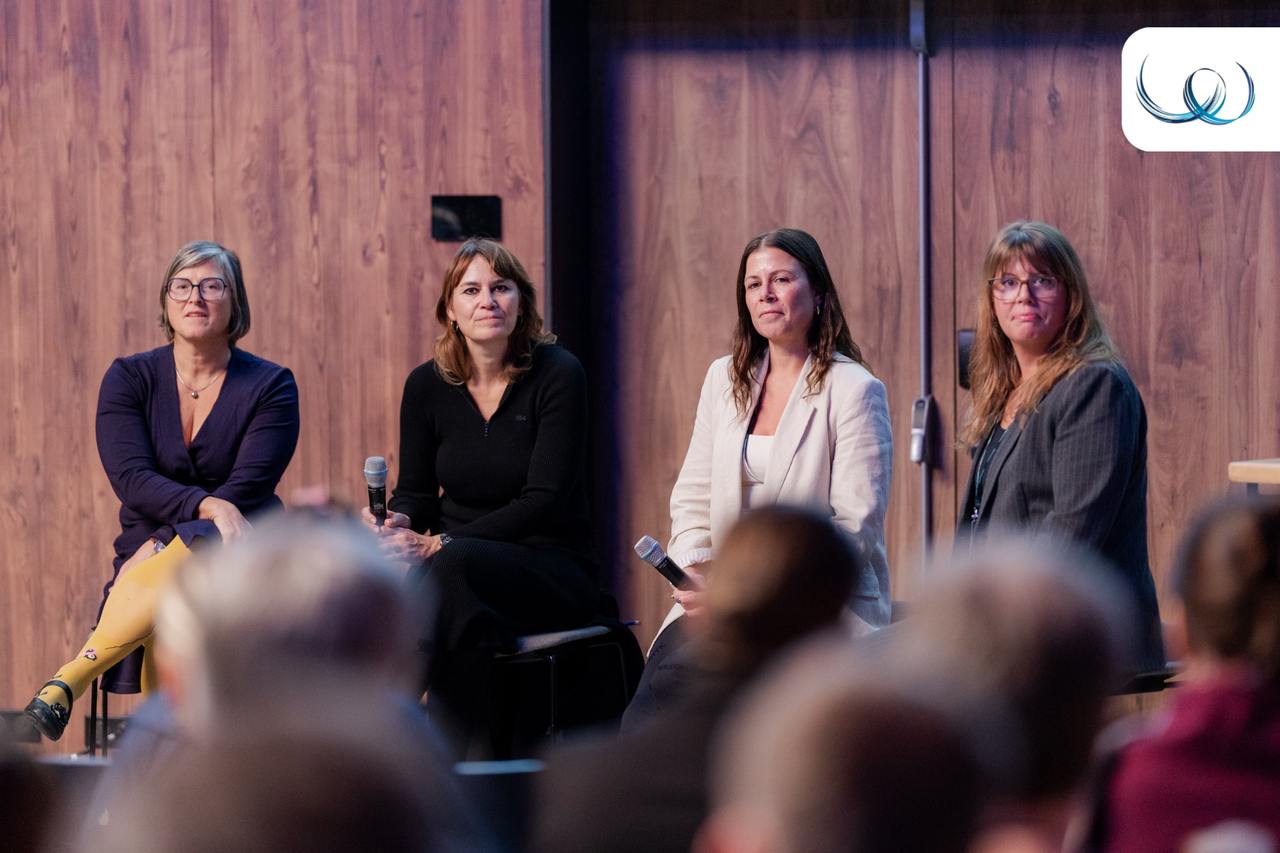
In Independent Coworking: Can Small, Local and Authentic Beat Scale?, moderated by Pernilla Ytterbring (QuickOffice), Cecilia Berglund (Gruts Work), Pauline Thomas (Le Laptop), Mélanie Burnier (The Workhub) and Ana Belac (Impact Hub Ljubljana) shared how they compete with bigger brands.
Cecilia pointed out that a small operator can't negotiate rates like a large one. That makes reputation everything. When members trust your space, word of mouth does the rest, especially in a small city. Mélanie showed what that trust looks like in practice. Every day, she walks through all the offices to say good morning. She introduces new members with similar careers to each other, and her space even runs swimming classes in the nearby lake. Her point: serve your local community by being present, in person. Pauline added that competitors are great teachers, and that your own professional reputation can become part of your space's story.
Operator takeaway: Your local knowledge and personal presence are a competitive advantage. Know your members by name, show up every day, and let word of mouth do the rest.
Getting found and getting chosen
Marketing: focusing on the people, the facility, and the price
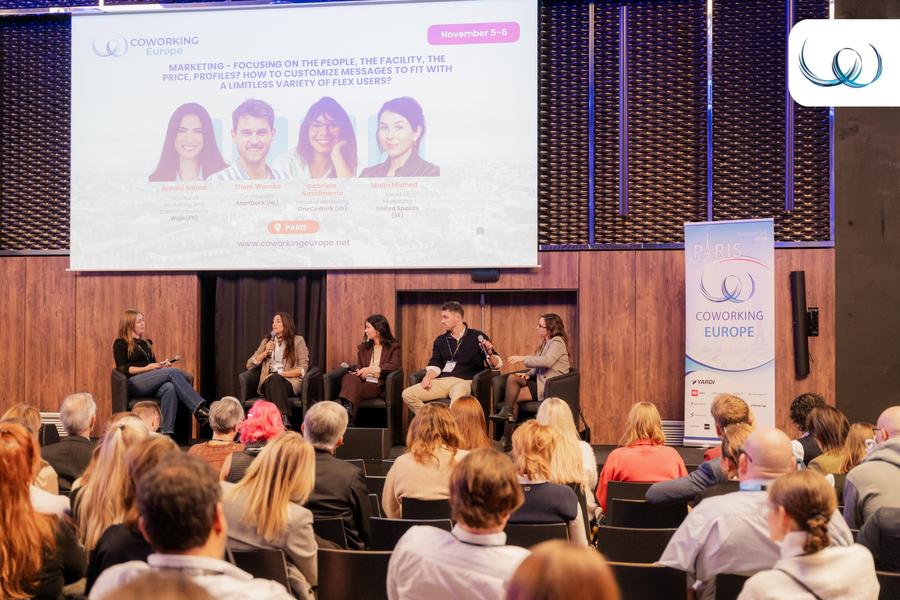
How do you reach a limitless variety of flex users? Anne-Marie Murphy (Baseworx) put that question to Amani Salma (Wojo), Malin Midhed (United Spaces), Thom Wernke (StartDock), and Gabriela Nascimento (OneCowork).
Amani pointed out that a few years ago, location and design set spaces apart. Today, every space looks great. So Wojo shows what it's like to live and work in the space, with lots of member interviews. She also encouraged every brand to invest in SEO. It takes time, but it pays off.
Malin shared United Spaces' tagline, "Better workdays with us." They sell workdays: how you feel when you leave compared to when you arrived. Her advice was to market to the whole team, since a CEO won't move the company where colleagues don't want to be. She also stressed consistency: same brand, same tagline, every time. Anne-Marie added a simple rule: if something works, double down.
Thom described events as one of StartDock's most important marketing tools. They partner with companies that want to run events in central locations. One of them, AI Builders, draws more than 200 people a month, and partners who bring in lots of leads can use the space for free. StartDock also invited Amsterdam's entrepreneur clubs into their spaces and treats them as partners. Their main KPI across all locations is NPS, because happy members bring in new members.
Gabriela brought hard numbers from OneCowork's 11 locations in Spain. Around 70% of their leads come from the website and around 30 to 35% from Google Ads. On promotions, she was clear: they work for meeting rooms and short decisions, but for private offices, discounts aren't the center of the conversation. In her words, if price is the reason they choose you, price will be the reason they leave. OneCowork is also optimizing for AI visibility while keeping SEO strong, and their organic efforts have already doubled the number of people finding them through AI tools.
Operator takeaway: Show real life in your space, stay consistent, and turn events and partners into lead sources. Use promotions for short-term products and protect the value of your offices.
Want more marketing ideas like these? Our Coworking Marketing newsletter shares practical marketing tips for coworking operators every other week.
Beyond the Space: how customer stories and people build value
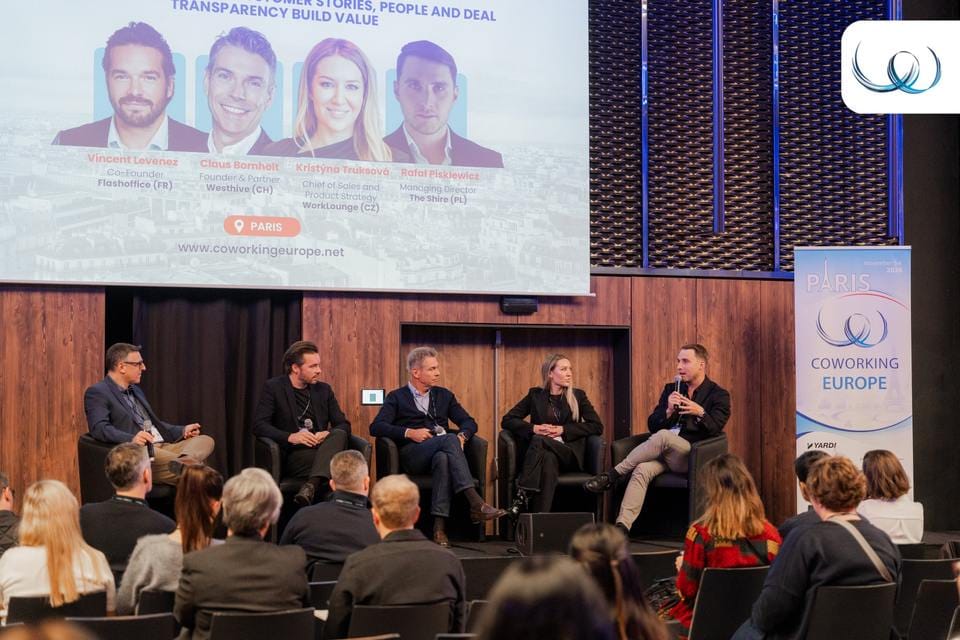
Jean-Yves Huwart moderated this Day 2 panel with Vincent Levenez (FlashOffice), Claus Bornholt (Westhive), Kristyna Truksova (WorkLounge) and Rafał Pisklewicz (The Shire).
Claus compared workspaces to hotels: where you work says something about you. Location and style matter, and so does employer branding. Westhive offers suites where clients bring their own branding, and bigger companies need the space branded for them.
Rafał showed how a clear identity attracts the right members. The Shire leaned into being different from the big brands with the tagline "we are not so cool," and started promoting its niche. After one viewing, a prospect said, "See, I told you they are not too cool." For Rafał, choosing an office is a lot like choosing a car. In Warsaw, many of his clients are law firms, and the office has become an amenity that motivates employees to come in. His members act as ambassadors.
Operator takeaway: Know who your space is for and say it out loud. A clear identity and the stories of members who love it will attract the right people.
People make the space
From Members to Community
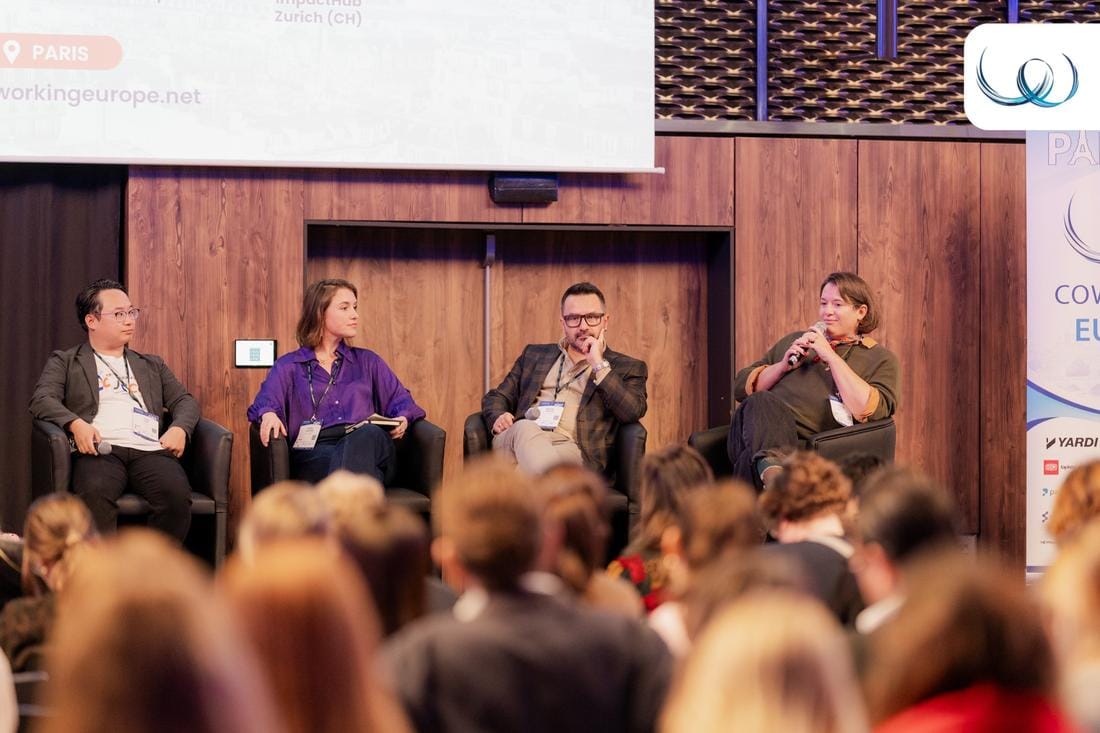
Marta Moksa (O4) moderated From Members to Community with Yuta Aoki (JCCO), Alexa Lightner (B-Amsterdam), Michal Kwinta (Mindspace) and Simone Uster (Impact Hub Zürich). It was one of the warmest sessions of the conference, and full of ideas operators can copy tomorrow.
For Michal Kwinta (Mindspace), community is retention, and retention is the cheapest way to improve your numbers. A Mindspace survey found that 45 to 48% of members started doing business together after meeting in the space. He sees the first three months as critical, so onboarding gets his full attention.
Yuta shared how he trains community managers in Japan. At the top of his pyramid is solving members' problems, supported by lots of daily communication, including a simple thank you. His team runs coffee meetups twice a week, and if a member is stuck on a video call, they pour a coffee and set it aside for them. Yuta stopped using NPS shortly after COVID. In one meeting where his team shared ideas with members, a member raised his hand and said, “We are not guests; we create this space together.” Today, members share compliments with the team directly, so NPS isn’t needed. His members have gone from clients to co-creators.
Alexa brought a Dutch onboarding tradition: when a new company moves in, they get two beers, one for themselves and one to share with their neighbors. She also talked about the power of stories. Community teams hear the best ones first, so capture them and share them, because that's what encourages others to join in. Instead of relying on NPS alone, B-Amsterdam tracks whether attendance across regular events is growing over time.
Simone runs mandatory one-hour welcome sessions for new members at Impact Hub Zürich. Groups of 10 to 15 newcomers already start making connections, and many grab coffee together right after. Her advice on measuring community: talk to members and start counting smiles at your events.
She shared a recent moment: two members from completely different companies were going to a football match together, simply because they had met in the space. That kind of serendipity is what all the events and effort are for, even when you don’t see it every day.
Operator takeaway: Invest in the first three months, build small rituals, and share the stories of members who met in your space.
The people behind the space
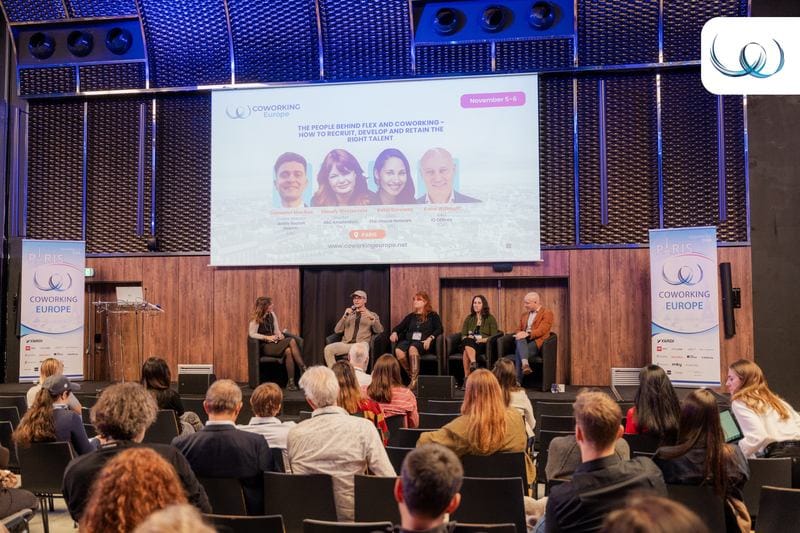
Every operator knows that the right community manager can make or break a space. Sara Ozorai (KLUSTER) moderated a candid panel on hiring and keeping great people with Cameron MacRae (Bottle Rocket Search), Maudy Westerveld (EBC Amsterdam), Katie Baroway (The Ohana Network) and Kane Willmott (IQOffice).
Kane Willmott (IQOffice) used a simple picture to explain how community and sales roles differ. A community manager is like a dolphin, and a salesperson is like a shark. You wouldn’t swap them. At IQOffice, community managers used to do everything, from sales to billing to mail. As the company grew, this stopped working. When each person focused on what they do best, the team became happier.
Katie saw the same thing at Denver Coworking. When people focus on what they're good at, they take off and burnout drops. Give people a few things to own, not ten. She also gets very specific in interviews. Walking a candidate through a real task, like handling mail, shows quickly how willing they are to learn.
Cameron said skill fit is rarely the problem. Culture fit is. He shared three things that keep people: pay (paying even 2% above market makes people less likely to leave), culture (if it's toxic, money doesn't matter), and room to grow. Maudy keeps her team close with monthly recaps, coaching, and a safe space to check in, plus plenty of fun.
Kane Willmott (IQOffice) summed up his approach to retention: “This may not be your last job, but we want it to be your best job.”
Operator takeaway: Hire for culture, define roles around strengths, and give your team room to grow.
AI and the future of flex space
Your AI Doesn't Know What You Sell
The talk that changed how we think about AI came from Gerrit McGowan (ODA AI). In Your AI Doesn't Know What You Sell, he made one clear argument: every workspace has a spatial data problem.
Think about the questions your team answers every day. How do I fit 12 people and two phone booths in Suite 4? How can we combine two offices for 20 people? Which meeting room near the kitchen seats eight? Where is the AC unit that needs servicing? Almost every workspace question is a spatial question.
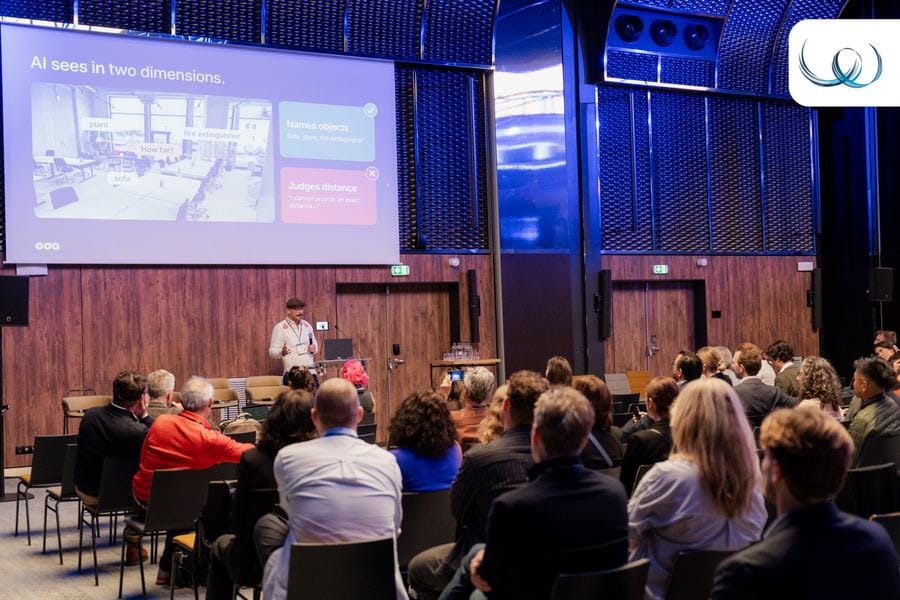
Gerrit explained that humans understand space through the body. In one study, people badly misjudged the slope of a hill when describing it, but were accurate when estimating it with their bodies. In another, the part of the brain responsible for spatial understanding grew in cab drivers the longer they drove. Real experience is what builds spatial understanding.
AI has none of that experience. It learns about space from text, images, plans, and spreadsheets, which are all flat. It can name a sofa in a photo, but it struggles with distance, scale, and how rooms connect. AI is only now learning to see in 3D. According to his slides, AI still trailed people in real rooms at the end of 2024, scoring 45% against 79% for people.
The data that would help is often missing anyway. It's hidden in the physical space, scattered across floor plans, spreadsheets, and your community team's memory, unstructured and quickly outdated. Every time a member moves in or out, the layout changes, but the floor plan rarely does.
Operator takeaway: Before you ask AI to answer questions about your space, look at the spatial information you actually hold. Accurate floor plans, room details, and current layouts make your space easier to sell, for both people and AI.
The AI-Adapted Flex Workspace
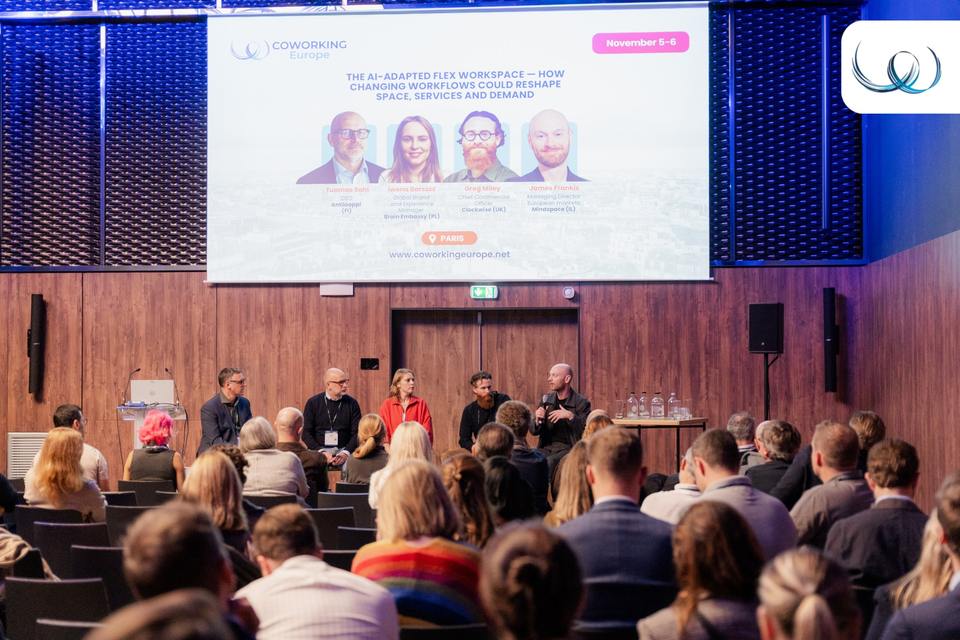
Jean-Yves Huwart moderated a panel on how changing workflows could reshape space, services, and demand, with Tuomas Sahi (Antiloopii), Iwona Barszcz (Brain Embassy), Greg Miley (Clockwise Offices), and James Frankis (Mindspace).
Tuomas summed up the shift: digitalization changed where we work, and AI is changing how we work. Across more than 600 tenants, he sees the need for collaborative space rising sharply while solo desk work shrinks. AI also creates new demand for private spaces where people can talk to AI, and for project rooms where teams and AI agents get work done together.
Iwona brought data from Warsaw. In a survey of 800 employees, 72% named creativity and idea sharing as a key benefit of the office. She also raised a concern many operators share: AI could add to loneliness, which makes community even more important.
Greg noticed more pressure on phone booths as people dictate to AI, though he said it's too early to know the exact cause. He also warned that discoverability is changing. Your website needs information AI can read, and it should lead visitors to a decision. AI loves external citations, so PR matters more than ever.
James encouraged operators to stand out with unique features, like a podcast room, and to keep developing their product. He expects more demand for event space and in-person time. His big observation: in an industry that mainly sells desks, desk demand is declining, and suites may increasingly be sold like products, with desks as one feature.
Operator takeaway: Watch how your members actually work today. More collaboration space, quiet spots for calls, and a website AI can understand will keep your space relevant.
When the lights go out, the people become the power
Christine Seryozhechkina runs Kooperativ in Kyiv. Her keynote, Coworking as an Engine of Resilience During Wartime in Ukraine, showed the deeper role coworking can play: bringing people together and keeping a community going in the hardest times. She built it around three sources of resilience: people, rhythm, and place.
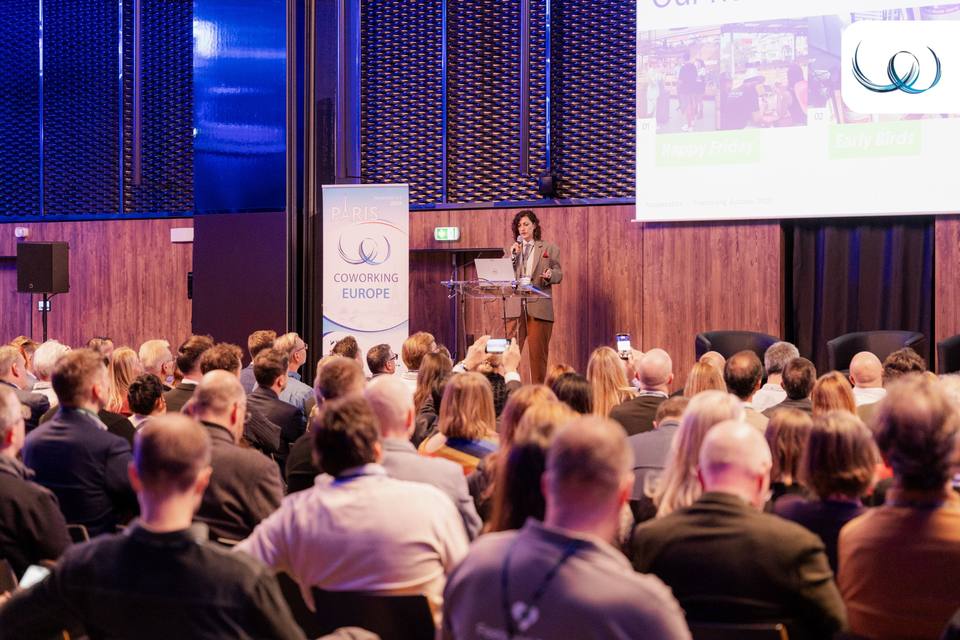
On people, her message was simple: people don't come for desks; they come for each other. On rhythm, she showed how rituals become an anchor when nothing can be planned. Kooperativ creates its own rituals for members and the team, from onboarding to anniversaries and from BBQ days to movie nights, including Happy Friday and Early Birds. Most of them cost almost nothing and give a lot back.
On place, Kooperativ makes sure people can keep working through blackouts and air raid alerts, with a generator, Starlink, and a shelter. Then the community did something remarkable. Since June 2025, their bomb shelter, Koop Shelter, has become an event venue that has hosted 130 events and more than 4,700 guests.
Her three lessons apply to every space, in any situation: make connections part of the product, protect your rituals especially in the hardest times, and make it safe so people bring life to it. And she gave us the line of the conference: "When the lights go out, the people become the power."
Thank you, Coworking Europe 2026
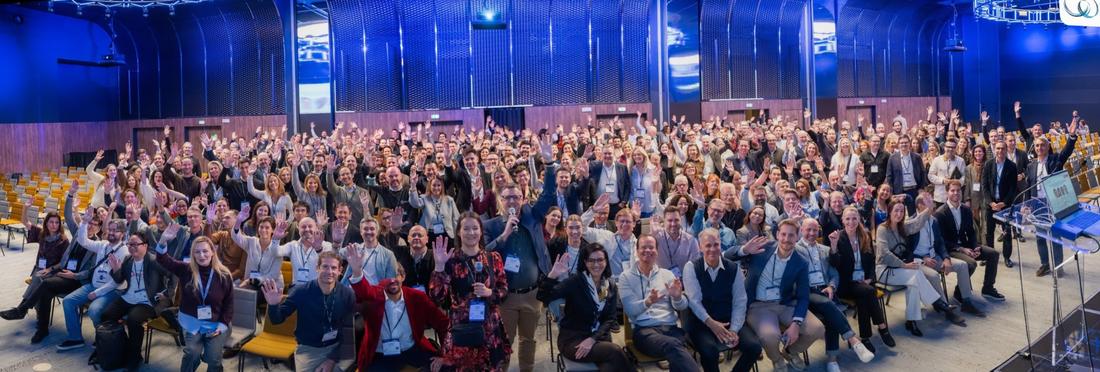
In three days, we learned more than we ever could on our own, and that only happened because Jean-Yves Huwart, Szilvia Filep and Robert Faulhaber brought it all together. Operators, partners, and friends came from all over the world, and hearing them talk about their spaces with so much passion was the best part. We're grateful for the chance to exchange ideas with all of them, and we're looking forward to sharing what we learned with our community.
Many of the ideas from Paris come down to making it easy for people to find you, book with you, and stay with you, from day passes and meeting rooms to memberships and virtual offices. If you're looking for an intuitive, easy-to-use way to manage it all, try Cobot for free.
See you next year!