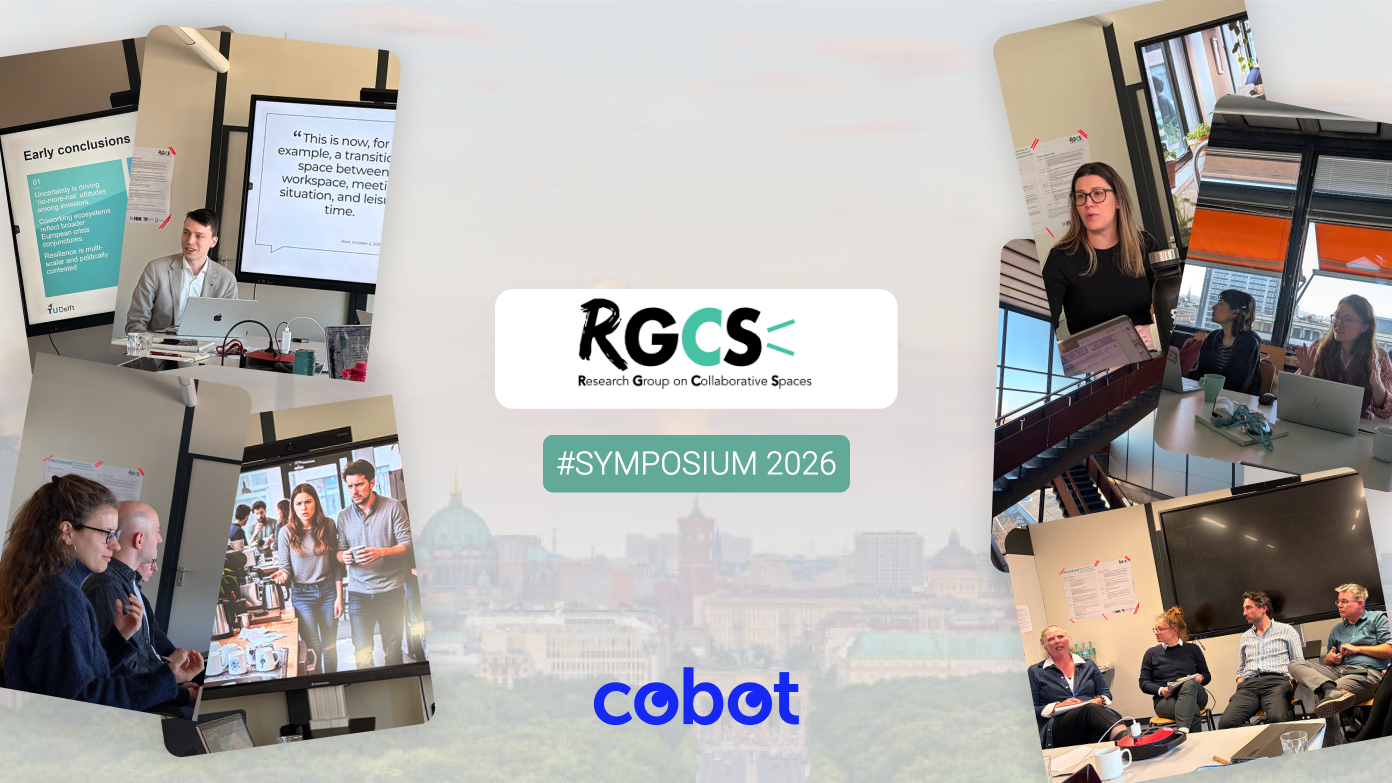
Last week, I, Rosee Shrestha (a marketing assistant and content writer at Cobot, if you are not familiar yet 😅), had the opportunity to attend the Research Group on Collaborative Spaces Symposium. This year, it was organized by the Chair of Urban and Regional Economics at the Institute for Urban and Regional Planning (ISR) at Technische Universität Berlin, together with the project ZETT – Zentrum Digitale Transformation Thüringen in Jena, Germany 🇩🇪.
RGCS is an international research network exploring collaborative environments such as coworking spaces, makerspaces, and other community-driven initiatives. RGCS examines these spaces not just as workplaces but also as places that shape how people organize, collaborate, and build communities.
Over two days, researchers from different disciplines shared perspectives on collaborative spaces through topics like belonging, professional identity, urban resilience, digital infrastructure, and community governance.
For me, it was fascinating to hear coworking discussed from so many angles. The conversations offered a deeper lens on these spaces, not just as workplaces but as social and cultural infrastructures that continue to evolve.
All of the presentations were interesting in their own way, but I gathered eleven insights that felt especially relevant for the coworking community. Among them is a takeaway from the panel with Berlin coworking operators that I think will be particularly useful for the Cobot community.
And a big thank you to all the researchers who traveled from across Europe 🇪🇺 to share their work.
Table of Contents
- Putting Work at the Center of Coworking: How everyday work practices, shared norms, and small interactions shape the coworking experience.
- Panel: Beyond Community? Coworking Between Ideals and Infrastructure: Operators and researchers discuss the tension between coworking’s grassroots ideals and the realities of running sustainable spaces.
- Smart Coworking Environments: How digital infrastructure, sensors, and smart systems can reshape how coworking spaces operate and support members.
- Hybrid Work, Organizational Space, and Identity: Research on how hybrid work affects professional identity and why coworking spaces can help distributed workers reconnect with professional environments.
- Third Places as Informal Coworking Spaces: An ethnographic study of the Barbican in London showing how cultural and public spaces function as informal coworking environments.
- Women (In)Visibility in Non-Territorial Offices: How flexible seating environments influence visibility, collaboration networks, and access to opportunities.
- Coworking Spaces as Elite Territory in the Post-Digital City: How design, aesthetics, and cultural signals shape who feels welcome in coworking spaces.
- Coworker Subjectivities in Community-Led Workspaces: Personal narratives showing how coworking influences identity, motivation, and career development.
- Coworking as Urban Resilience Infrastructure: How coworking spaces help cities adapt to economic shifts, crises, and changing office markets.
- Innovation and Atmospheres of Hospitality: The rise of coworkation and how hospitality environments influence collaboration and work routines.
- Community-Led Regeneration: A case study of Institut for (X) in Aarhus showing how coworking can support grassroots urban development through collective governance.
1. Putting Work at the Center of Coworking
Author: Gislene Feiten Haubrich, House of Innovation - Stockholm School of Economics (SSE)
This paper questions the dominant narrative that coworking is primarily about community and collaboration.
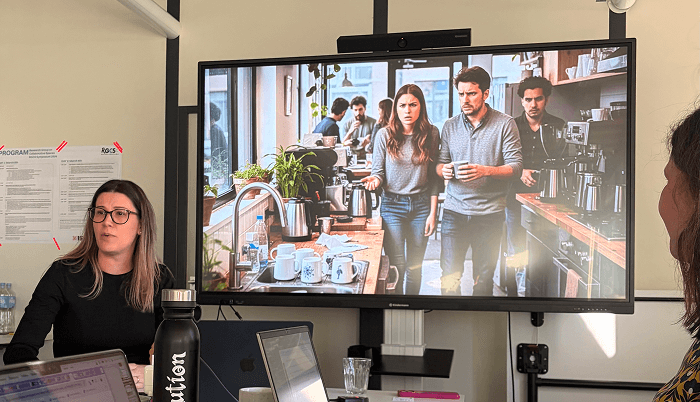
Instead, it focuses on work as a relational activity shaped by everyday coordination and shared norms. The study asks a deeper question:
What values are expressed through the ordinary actions people perform while working in coworking spaces?
Key insight
Work in coworking spaces is inherently relational. Even routine activities depend on ongoing adjustments between coworkers who share the same environment but may not belong to the same organization.
Everyday situations such as negotiating noise levels, sharing resources, or coordinating the use of common areas shape how people experience work in these spaces. These seemingly mundane activities play an important role in forming shared norms and expectations.
The research also highlights a difference between many independent coworking spaces and large coworking chains. In larger chains, many of these everyday responsibilities are handled by staff. Tasks such as cleaning, organizing shared resources, or maintaining common areas are largely invisible to members.
In smaller or community-led spaces, these mundane interactions remain part of everyday life. As a result, coworkers become more aware of how their work practices affect others, and coordination becomes a collective process.
By focusing on these everyday dynamics, the study shows how coworking spaces can reveal the values embedded in everyday work activities, and how cooperation and negotiation emerge through daily practice.
A Broader Implication
By examining these everyday work practices, the research suggests that coworking spaces can function as environments where forms of democratic organizing emerge through daily work routines.
Instead of focusing only on formal empowerment structures, the study highlights how cooperation, negotiation, and coordination take place through continuous interaction between coworkers.
This perspective also raises questions about the future of work. As automation changes many types of labor, the human aspects of work may increasingly lie in coordination, negotiation, and shared meaning-making.
Why this matters for coworking
The research challenges the idea that coworking is primarily about collaboration or networking.
Instead, coworking can be understood as a place where different ways of working coexist and are continuously negotiated through everyday practice.
For operators, this suggests an important shift in perspective.
Rather than focusing only on programming or community building, it can be useful to observe how members actually work in the space, including how they coordinate with others, negotiate shared norms, and manage everyday interactions.
Understanding these dynamics can reveal the underlying values that shape how coworking spaces function.
Methodology
The study builds on sociological theories of work and observations from coworking environments.
It emphasizes the importance of mundane activities, such as cleaning shared spaces, managing noise levels, or coordinating schedules.
2. Panel Discussion: Beyond Community? Coworking Between Ideals, Infrastructures and Everyday Constraints
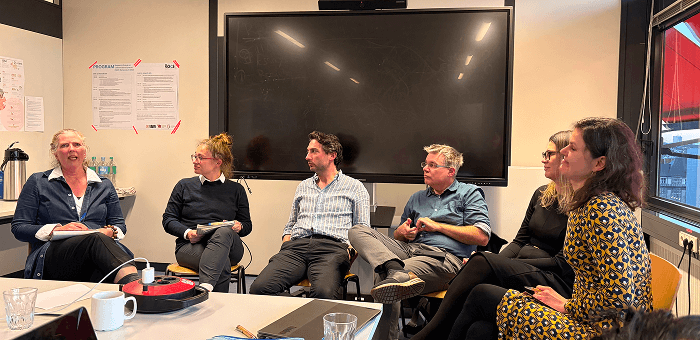
Moderation: Alexandra Bernhardt and Janet Merkel
Panelists:
Katja Hellkötter — C*Space, Berlin 🇩🇪
Christopher Weiß — Beydes, Berlin 🇩🇪
Ferhat Engel — Engelnest, Berlin 🇩🇪
Katarzyna Wojnar — Delft University of Technology 🇳🇱
Gislene Feiten Haubrich — House of Innovation - Stockholm School of Economics 🇸🇪
Key insights
The panel explored how coworking has evolved from grassroots communities into an increasingly institutionalized form of urban infrastructure. As the sector grows and large operators enter the market, panelists reflected on the tension between coworking’s original community-driven ideals and the economic realities of running shared spaces.
Several speakers highlighted that independent spaces face structural challenges. Rising rents, inflation, and energy costs have forced many operators to diversify revenue models, host events, or develop partnerships to remain viable. At the same time, the pandemic accelerated demand for flexible work environments, as many workers now prefer working close to home rather than commuting to headquarters.
Another recurring theme was the role of coworking as a place of belonging and professional legitimacy. Coworking spaces not only provide desks. They create environments where remote workers and freelancers can feel part of a professional community.
The panel also raised questions about the future geography of coworking. While coworking remains largely a metropolitan phenomenon due to proximity to clients and decision makers, some speakers suggested that the next phase may include more decentralized and rural coworking networks.
Overall, the discussion highlighted that coworking continues to navigate a tension between community, economic sustainability, and changing work patterns, while still offering a unique environment where work and social connection intersect.
3. Smart Coworking Environments
Authors: Mohammad Mehdi Latifi, School of Management, University of Tehran, Mina Sadat Orooje, DABC-Politecnico di Milano
This research explores how sensors, smart building systems, and digital platforms could shape coworking environments. Coworking research mainly focuses on community building, social interaction, and collaboration among workers, whereas smart workplace research concentrates on technology, automation, and digital infrastructures. Because these two perspectives are often studied separately, there is limited integration between the social and technical dimensions of workspaces.
Key insight
The concept of the Internet of Everything (IoE) is presented as a way to connect people, data, processes, and physical devices within coworking spaces. In practice, this can involve technologies such as smart booking systems, occupancy monitoring, and digital collaboration platforms. These tools can help manage space usage, support communication among coworkers, and create more responsive and flexible working environments.
IoE-enabled coworking spaces can offer several benefits. These include improved space efficiency, better collaboration insights, personalized user experiences, and data-driven management decisions. However, the integration of digital systems also raises concerns, including privacy and surveillance risks, data ownership issues, algorithmic control over behaviour, and potential inequalities between users.
To address these challenges, the presentation proposes an IoE framework consisting of four interacting layers: people (collaboration and inclusion), data (decision-making and transparency), processes (automation and efficiency), and things (smart responsive spaces). Smart coworking environments emerge from the interaction of these layers, but the speaker emphasizes that ethical governance is essential to ensure that technological innovation supports fair and inclusive workplaces.
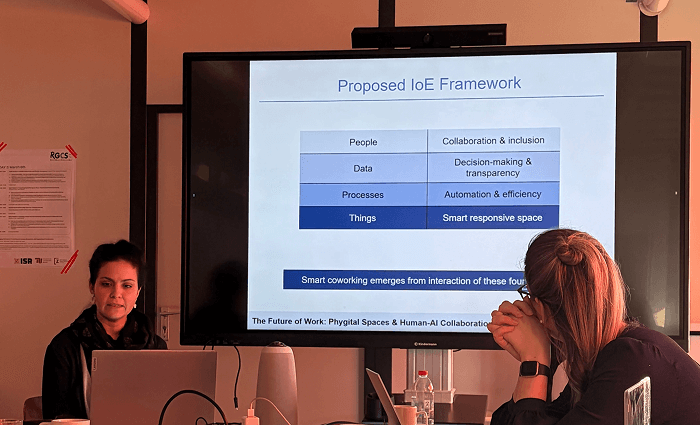
In this context, coworking management platforms such as Cobot illustrate how the socio-technical model can function in practice. Cobot connects several layers of the proposed IoE framework: it supports people through member directories and event participation, data through insights into space usage and membership activity, and processes through automated bookings, billing, and access management. Rather than replacing human interaction, these digital tools help operators coordinate the social and operational aspects of coworking spaces more efficiently.
Why this matters
Technology will increasingly shape how coworking spaces operate. Understanding coworking as a socio-technical environment helps explain how technology, space design, and community management interact to shape how people work and collaborate.
Operators should consider how digital tools support both operations and community engagement.
4. Hybrid Work, Organizational Space and Identity
Authors: Alessandra Migliore, Politecnico di Milano and Guang Zhu
This research examines how hybrid work reshapes professional identity and the relationship between employees and physical workplaces.
Key findings
According to the study, hybrid work can weaken the connection between employees and the organization’s physical workplace. However, physical proximity still plays an important role in maintaining relationships with external stakeholders.
Hybrid workers also tended to rely on more formalized interaction structures, such as scheduled meetings and planned communication.
At the same time, the impact of hybrid work depends on how work was already organized. Organizations where employees were already physically dispersed in the office or used to coordinating through digital tools were less negatively affected by hybrid work, as teams were already accustomed to collaborating across distance.
Why this matters for coworking
When employees no longer have a single office as their main workplace, they often look for environments that reinforce their professional identity and social belonging.
Coworking spaces can function as identity anchors for distributed workers.
Actionable insight
Coworking spaces can strengthen professional identity by offering:
- industry-specific communities
- regular member introductions
- opportunities for professional visibility
Methodology
The study followed an organization over time and combined:
- CRM data from 20,163 meetings
- surveys of employees
- analysis of hybrid vs non-hybrid workers
The dataset tracked organizational changes between 2018 and 2025.
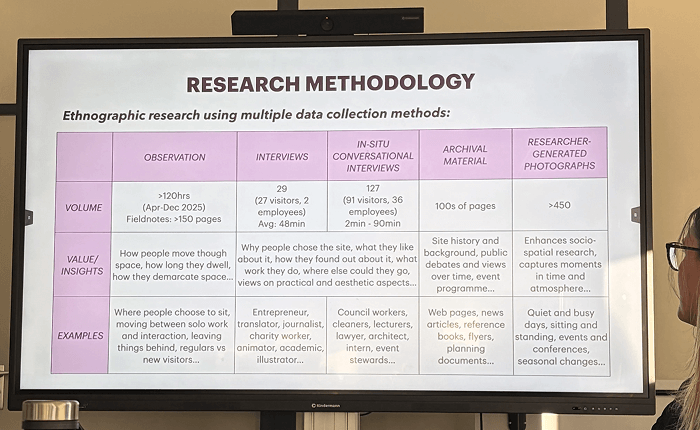
5. Third Places as Informal Coworking Spaces
Author: Maria Gratsova, University of Bath
This ethnographic study examines how the Barbican cultural center in London functions as a de facto coworking environment.
Key findings
The study identifies three modes of coworking behavior:
Active collaborators
People who intentionally coordinate working together and schedule collaborative sessions.
Aligned companions
People who work near others and engage in occasional social interaction.
Anonymous solo workers
People who want to work in a shared environment but without interaction.
Why this matters for coworking
Many coworking spaces focus heavily on networking and collaboration.
However, a large group of members may simply seek social presence while working independently.
Actionable insight
Spaces should support different types of workers, not only highly social members.
Design strategies include:
- flexible seating areas
- quiet social spaces
- optional rather than mandatory interaction
Methodology
The researcher used an ethnographic approach, observing how people use the space and how social dynamics emerge over time.
6. Women (In)Visibility in Non-Territorial Offices
Authors: Alessandra Migliore, Politecnico di Milano et al.
This research examines how activity-based workplaces affect gender dynamics and visibility.
Key findings
Different seating behaviors emerged.
Women were more likely to sit near collaborators and peers.
Men were more likely to position themselves near leaders and managers.
These spatial patterns influence visibility and access to power.
Why this matters for coworking
Flexible seating environments can unintentionally reproduce inequalities.
Members who are more comfortable positioning themselves in visible spaces may gain more access to networks and opportunities.
Actionable insight
Operators can encourage more inclusive environments by:
- designing a variety of seating zones that encourage interaction
- facilitating introductions
- reducing barriers to interaction
These practices can help ensure that access to conversations, opportunities, and visibility is not shaped only by informal positioning in the space.
Methodology
The study used a rich dataset from a consulting firm's headquarters in Paris 🇫🇷.
Researchers combined:
- Wi-Fi tracking data showing where employees sat
- social network surveys about collaboration patterns
- HR records on organizational structure
7. Coworking Spaces as Elite Territory in the Post-Digital City
Author: Karin Fast, Karlstad University
This keynote examines coworking spaces as identity-forming environments for knowledge workers.
Key findings
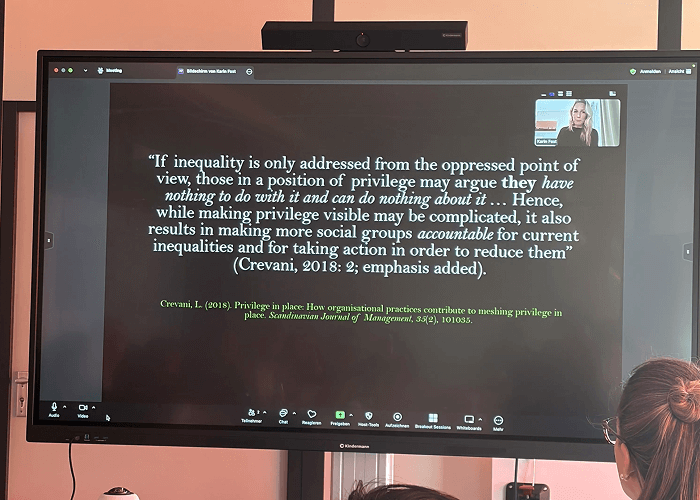
Eliteness does not only come from price but also from aesthetics and cultural cues.
Coworking spaces are not neutral workplaces. The research shows they can shape social and spatial power relations in cities as the sector expands.
Using Bourdieu’s concept of capital, the study suggests that exclusivity is not only financial. It can also be created through design, branding, cultural signals, and atmosphere, which influence who feels comfortable or visible in a space.
Across case studies in Oslo 🇳🇴, Malmö 🇸🇪, Denver 🇺🇸, and Palma de Mallorca 🇪🇸, coworking spaces appeared along a spectrum between cultural capital and economic capital. Some independent spaces emphasize creative or alternative identities, while others present more corporate and elite environments.
Coworking spaces also function as identity anchoring environments, where members express professional identity and lifestyle choices. At the same time, even spaces that try to resist elitism can develop their own forms of exclusivity.
Why this matters
This is useful for operators because it pushes a difficult but important question: what kind of social world does your space create? A coworking space may look open and welcoming, while still signaling that it is mainly for one class, profession, or cultural type.
Operators should reflect on how design and branding influence who feels welcome.
Methodology
The research analyzed 16 coworking spaces across cities, including:
- Oslo
- Malmö
- Denver
- Palma de Mallorca
It uses Bourdieu’s theory of cultural and economic capital.
8. Coworker Subjectivities in Community-Led Workspaces
Author: Nikos Gatsinos, University of Graz
This research explores how coworking spaces influence how individuals experience work and identity.
Key observations
One coworker, “Thanos” (alias), 26, studied computer science and arts and joined the hub while searching for fulfillment through creative work. He began contributing pro bono work for the space and became involved in its community activities. For him, coworking became meaningful through collaboration with others and shared social goals, and he described how being physically close to others helped inspire his work.
A second coworker described a different experience shaped by precarious labor conditions. He referred to himself as “acting as a pirate”, navigating unstable job opportunities while trying to build a career. Coworking offered a temporary anchor point where he could connect with others and better understand the opportunities around him, while also helping him develop professional visibility and self-branding, even though he remained cautious about relying too heavily on group dynamics.
Why this matters for coworking
In peripheral regions, coworking spaces can provide more than infrastructure. They can function as social anchors that help individuals rebuild professional identity, relationships, and opportunities in places where traditional career paths are limited.
For operators, this highlights the importance of understanding the diverse motivations that bring people into coworking spaces, especially in rural or economically vulnerable regions.
Actionable insight
Operators can strengthen this role by:
- fostering shared rituals
- encouraging peer support
- highlighting member projects and stories
Methodology
The research uses biographical narrative interviews to understand how individuals describe their relationship to work and coworking.
Two case studies were conducted in Austria 🇦🇹 and Greece 🇬🇷, focusing on how coworkers interpret their own motivations, values, and experiences.
The presentation focused on the Greek case.
9. Coworking as Urban Resilience Infrastructure
Author: Katarzyna Wojnar, Delft University of Technology
This research explores how coworking spaces contribute to urban resilience, particularly in periods of economic uncertainty, geopolitical disruption, and structural changes in the office market.
Key findings
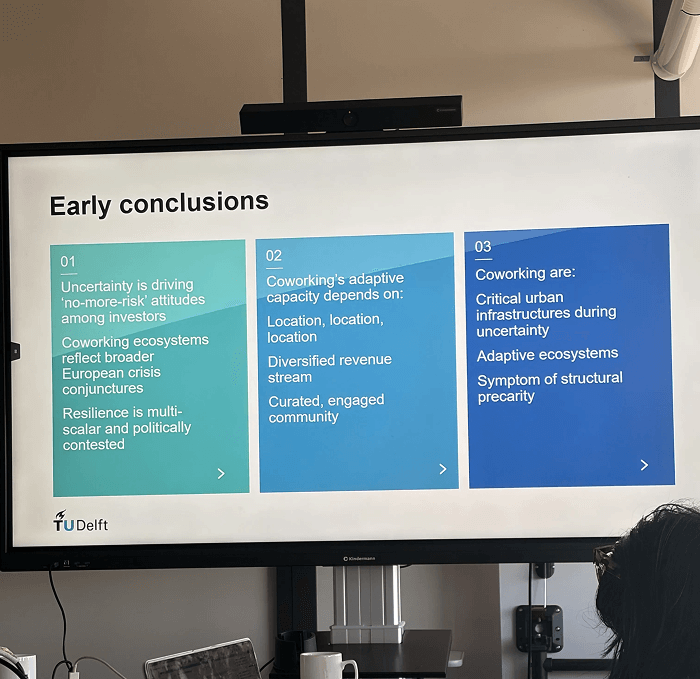
The research shows that coworking spaces operate within a broader context of overlapping crises shaping European cities.
These include inflation, rising housing costs, commuting congestion, geopolitical tensions, energy price increases, and structural changes in the office market, such as oversupply of office space and office-to-housing conversions.
Coworking spaces appear as adaptive responses within these shifting urban systems.
Their resilience often comes from being more flexible than traditional office models, both in terms of lease structures and space management.
Location remains one of the most decisive factors for resilience. Central areas tend to remain attractive despite economic fluctuations, while peripheral locations face greater risk and uncertainty.
At the same time, coworking operators increasingly diversify revenue streams and adapt existing buildings rather than relying only on new developments.
Community building also plays a significant role. Spaces that actively curate communities and build member loyalty are better positioned to adapt during periods of instability.
Why this matters
The research suggests that coworking spaces play a growing role in helping cities adapt to economic uncertainty and changing work patterns. Their flexibility, ability to reuse existing buildings, and strong communities make them more adaptable than traditional office models.
For operators, this reinforces the importance of location, diversified revenue streams, and active community building as key factors that strengthen resilience in uncertain markets.
Methodology
The study compares coworking ecosystems across cities such as:
- Warsaw 🇵🇱
- Stockholm 🇸🇪
- the Randstad region in the Netherlands 🇳🇱
It uses qualitative interviews and comparative urban analysis.
10. Innovation and Atmospheres of Hospitality
Author: Felix Hiemeyer, School of Transformation and Sustainability, Catholic University Eichstaett-Ingolstadt
This research examines the intersection between coworking spaces and hospitality environments. It focuses on the emerging concept of coworkation, where work, travel, and leisure are combined.
Key findings
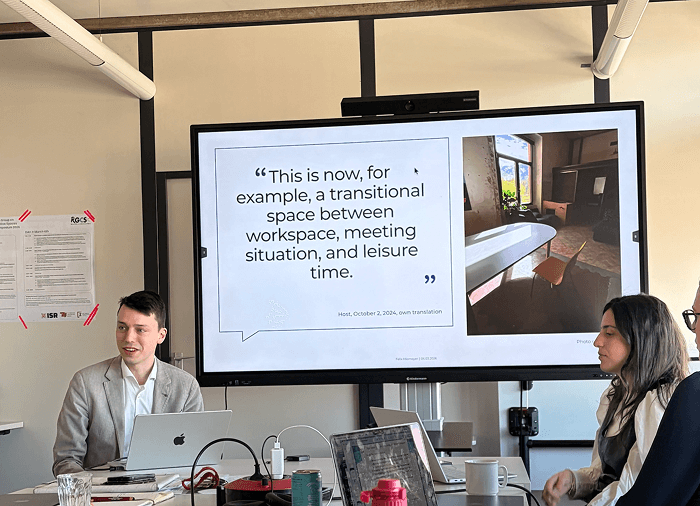
Coworkation is not simply remote work in a holiday destination. Participants usually arrive with clear projects and work goals.
Leisure activities are integrated into daily routines and can support productivity. Activities such as morning yoga, shared breakfasts, or informal gatherings often create moments where co-creation and collaboration emerge.
Participants also structure their days in a more collective rhythm, often guided by a host who supports the group and helps organize the environment.
The research highlights the role of co-curating atmospheres, where hosts intentionally shape how work, social interaction, and leisure activities come together. These atmospheres are fluid rather than fixed and evolve through daily practices.
Typology of coworkation spaces
The research identifies three main types of coworkation environments:
- Creative places, where creative work and artistic production are central.
- Coworking spaces collaborating with nearby hotels, combining workspaces with accommodation.
- Hospitality-driven models, where professional operators rent rooms and transform them into temporary offices.
Why this matters for coworking
Coworkation suggests that coworking spaces can become part of broader hospitality ecosystems, where work, travel, and community experiences merge.
For operators, this highlights the potential to collaborate with hotels, tourism actors, or local hosts to create environments that support both focused work and meaningful social interaction.
Operators can improve member engagement by curating daily rhythms and shared rituals.
Methodology
The study used grounded theory to analyze coworkation environments and how people structure their work routines in these spaces.
11. Community-Led Regeneration
Author: Dimitris Manoukas, Politecnico di Milano
This research examines how grassroots coworking spaces organize themselves through shared governance and collective decision-making. The case focuses on Institut for (X) in Aarhus 🇩🇰, a creative district where artists, makers, and entrepreneurs share workspaces while collectively shaping the environment around them.
Key insight
The study highlights do-ocratic governance, a model where decisions are made by those who actively contribute and take responsibility for projects.
Institut for (X) offers an example of coworking when community participation is taken seriously and implemented well. In the space, coworking is closely connected to collective maintenance and participation. Members not only use the space, but they also take part in maintaining buildings, organizing events, and shaping how the district evolves.
This highlights the importance of maintenance labour, the everyday work required to sustain shared environments. Activities such as repairing spaces, coordinating community initiatives, and caring for common resources become central to how the coworking ecosystem functions.
Rather than operating as a traditional office environment, the space functions as a collaborative urban experiment, where coworking, cultural production, and community governance are closely intertwined.
Why this matters
Community is not automatic.
It requires:
- facilitation
- conflict resolution
- shared responsibility
Operators who want to build stronger communities can create opportunities for members to participate in shaping and maintaining the space, fostering a sense of ownership.
Closing reflections
Attending RGCS made it clear that coworking spaces are being studied not only as workplaces but as social, urban, and organizational environments that influence how people collaborate, build identity, and navigate changing work patterns.
Across the presentations, a common thread emerged: coworking spaces sit at the intersection of community, infrastructure, and everyday work practices. They can support belonging, experimentation, and collaboration, but they also face real challenges related to sustainability, governance, and urban change.
It was a wonderful opportunity to be part of this symposium. Everyone I met was incredibly down-to-earth, curious, and welcoming. A big thank you to the Research Group on Collaborative Spaces community for the work they do and for creating a space where these conversations can happen. Special thanks as well to Janet Merkel and Dr. Alexandra Bernhardt for keeping everything running so smoothly and for making the experience so welcoming.